What Are Tea Bags Made Of?
If you’ve ever wondered what goes into your daily cup of comfort, you’re not alone. Many people struggle to find tea bags that are both safe and eco-friendly, without sacrificing flavor. Understanding what tea bags are made of can help you make better choices for your health and the planet.
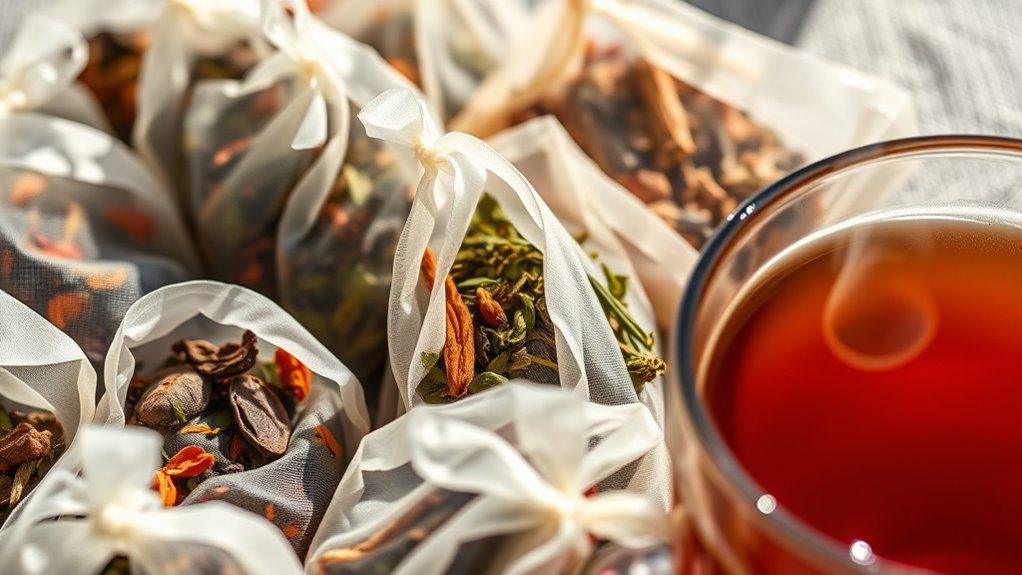
Tea bags are made from various materials, including traditional paper, synthetic fibers, and natural fabrics. Most paper bags use recyclable or biodegradable options, enhancing your tea experience.
However, some synthetic bags can leach harmful chemicals or microplastics.
If you’re looking for eco-friendly choices, consider biodegradable or compostable options made from plant-based fibers. These choices aren’t just better for the environment; they also maintain the fresh taste of your tea.
You’ll uncover more insights on this topic ahead.
Key Takeaways
- Tea bags are traditionally made from recyclable paper, including filter and biodegradable paper.
- Some tea bags use synthetic materials like nylon or polyester, which raises concerns about chemical leaching.
- Eco-friendly options include biodegradable materials like cornstarch, hemp, and unbleached paper.
- Compostable tea bags break down naturally and enrich soil without releasing microplastics.
- Organic-certified tea bags contain fewer chemicals and support sustainable farming practices.
Why Tea Bag Materials Matter
When you reach for a tea bag, you might not think about what it’s made of, but the materials can greatly impact your brew. The choice of tea bag influences not just flavor, but also your overall experience. Recent tea bag innovations have introduced biodegradable options, addressing environmental concerns while catering to consumer preferences for sustainability.
Many people now seek out bags that are free from harmful chemicals, ensuring their tea is as pure as possible. The material affects how well the tea can infuse; porous bags allow for better extraction, enhancing taste.
As you investigate different brands, consider how the materials used align with your values. Whether it’s traditional paper or newer plant-based options, understanding these choices helps you make informed decisions about your tea, ensuring each cup is both enjoyable and in harmony with your lifestyle.
What Are Traditional Paper Tea Bags Made Of?
When you grab a traditional paper tea bag, you’re probably using one made from a mix of common paper materials. Now, it’s interesting to think about the chemical treatments these bags often go through and how that might sneak into your brew. And with more people caring about the planet these days, it’s definitely worth wondering how these tea bags stack up when it comes to sustainability.
Common Paper Materials
Tea bags, those convenient little pouches of flavor, are typically crafted from a variety of paper materials. Most traditional paper tea bags use recyclable paper made from natural fibers like wood pulp. This guarantees you can enjoy your tea while being mindful of the environment.
Here’s a quick look at common paper materials used in tea bags:
| Material | Description |
|---|---|
| Recyclable Paper | Made from wood pulp, eco-friendly |
| Filter Paper | Allows water to flow, retains tea |
| Biodegradable Paper | Breaks down naturally over time |
| Non-Woven Fabric | Durable, often used in premium bags |
| Cotton Paper | Soft, often used for herbal teas |
Understanding these materials can improve your tea-drinking experience while keeping sustainability in mind.
Chemical Treatments Involved
While traditional paper tea bags are made from recyclable materials, they often undergo various chemical treatments to improve their performance and longevity. These chemical processes can involve bleaching agents that make the paper more visually appealing and strengthen it.
Furthermore, some manufacturers use coatings to boost moisture resistance, ensuring the bags hold up during brewing. Material sourcing plays an essential role here; the choice of pulp and additives impacts not just functionality but also the overall quality of your tea experience.
Environmental Considerations Today
Although many enjoy the convenience of traditional paper tea bags, it’s important to contemplate what they’re made of. Typically, these bags consist of paper that may be treated with chemicals, affecting their environmental impact.
To make a positive change, look for brands that emphasize sustainable sourcing. This means they use materials from responsibly managed forests, reducing deforestation and promoting biodiversity.
Moreover, consider how you dispose of used tea bags. Many people don’t realize that not all paper tea bags are recyclable due to their components. Following better recycling practices can help minimize waste.
Are Silk Tea Bags Worth the Investment?
Have you ever wondered if silk tea bags are really worth the extra cost? When you weigh the benefits, it’s clear they offer some unique advantages. Silk tea bags provide superior breathability, allowing for better infusion of flavors compared to standard paper options. This means you get a richer, more aromatic cup of tea.
In terms of silk benefits, these bags are often biodegradable, making them a more eco-friendly choice than synthetic alternatives. However, they do come with a higher price tag. When doing a cost comparison, consider how often you drink tea and how much you value quality.
If you’re a regular tea drinker who appreciates a premium experience, investing in silk tea bags can enhance your ritual. Ultimately, it’s about balancing your budget with your taste preferences. If you prioritize flavor and sustainability, silk tea bags might just be worth that extra expense.
What’s up With Synthetic Tea Bags?
What’s the deal with synthetic tea bags? You might be surprised to learn that many of them are made from synthetic materials like nylon or polyester. While they’re designed to be durable, these materials can raise some health concerns.
When you steep a synthetic tea bag, there’s a chance that harmful chemicals may leach into your brew. Studies have shown that certain plastics can release microplastics and other substances into hot water, which isn’t exactly what you want in your cup of tea.
Moreover, synthetic bags often have a different texture and feel compared to natural options. If you’re conscious about what you consume, it’s worth considering the implications of using synthetic materials in your tea bags.
Ultimately, you’ll want to weigh the convenience against the potential risks to make an informed choice for your health and enjoyment.
How Tea Bag Materials Affect Flavor Extraction
When you choose a tea bag, the material can greatly influence how well the flavors extract during steeping. Different materials affect the brewing time and ultimately the flavor profiles you experience. For instance, natural fibers like cotton or paper allow water to flow through easily, promoting a quicker extraction of flavors.
In contrast, synthetic materials may hinder this process, resulting in muted tastes.
Consider these factors when selecting your tea bags:
- Material Composition: Natural fibers often yield fresher flavors.
- Breathability: A porous bag promotes better extraction.
- Thickness: Thicker bags may slow down flavor release.
- Shape: Pyramid bags can improve water circulation.
- Temperature Sensitivity: Some materials react differently to heat, affecting extraction.
Eco-Friendly Tea Bag Materials
When you pick tea bags, try to go for ones made from biodegradable and compostable materials. These choices don’t just cut down on waste—they also give you a more sustainable way to enjoy your favorite brews. So, let’s take a closer look at how these eco-friendly materials can make your tea time better while also being kinder to the planet.
Biodegradable Materials Used
Many tea bags today are made from biodegradable materials that help reduce environmental impact. You’ll find that these biodegradable innovations are paving the way for sustainable alternatives in your daily tea ritual. By opting for these eco-friendly choices, you contribute to a healthier planet.
- Plant-based fibers like hemp or cotton
- Biodegradable polymers, such as PLA (polylactic acid)
- Unbleached paper from sustainably sourced trees
- Natural silk alternatives made from plant fibers
- Cornstarch-based materials
Using these materials, tea bags break down more easily in the environment, minimizing waste. So, the next time you brew your favorite cup, keep in mind that your choice can support both your wellness and the planet’s health.
Compostable Tea Bag Options
As you investigate eco-friendly tea options, compostable tea bags stand out for their ability to break down naturally in your compost pile. These bags often use materials like cornstarch, hemp, or paper, making them excellent biodegradable alternatives.
By choosing compostable options, you’re not only reducing waste but also supporting sustainable sourcing practices.
Here’s a quick comparison of popular compostable tea bag options:
| Material | Benefits |
|---|---|
| Cornstarch | Fully biodegradable |
| Hemp | Durable and eco-friendly |
| Unbleached Paper | Chemical-free, compostable |
| Bamboo | Fast-growing, sustainable |
| Cotton | Natural fibers, compostable |
Switching to compostable tea bags can greatly reduce your environmental footprint while still enjoying your favorite brews.
Biodegradable and Compostable Tea Bags Explained
Although traditional tea bags often contain plastic, biodegradable and compostable options are gaining popularity among eco-conscious consumers. These alternatives not only reduce environmental impact but also offer several advantages you might appreciate.
- Natural materials: Made from plant-based fibers, these bags break down naturally.
- No harmful residues: They don’t release microplastics into your brew or the environment.
- Compostable benefits: You can add them to your compost pile, enriching the soil.
- Sustainable sourcing: Many brands prioritize sustainable farming practices.
- Flavor retention: Biodegradable options often maintain the fresh taste of your tea.
Switching to biodegradable options isn’t just about being trendy; it’s a step toward a greener lifestyle. By choosing these bags, you contribute to a healthier planet while enjoying your favorite brews guilt-free.
How Food Safety Impacts Tea Bag Choices
When you’re picking out tea bags, it’s a good idea to think about how safe the packaging materials are. If you’re going for organic tea, make sure it has the right certification so you know it meets health standards. Plus, the choices you make don’t just impact your health—they can affect the environment too.
Packaging Material Safety
While many people savor their tea without a second thought, it’s vital to contemplate the safety of the packaging. The materials used in tea bags have evolved markedly due to packaging innovations and stringent safety regulations. You want to verify that what you’re drinking is safe, so consider these factors:
- Material Composition: Look for biodegradable or food-safe materials.
- Chemical Leaching: Confirm the packaging doesn’t release harmful substances.
- Certification: Check for compliance with industry safety standards.
- Recycling Options: Favor brands that use recyclable packaging.
- Transparency: Choose brands that disclose their sourcing and manufacturing processes.
Organic Certification Importance
Understanding the importance of organic certification can greatly impact your tea bag choices, especially regarding food safety. When you choose tea bags with organic certification, you’re opting for products that have fewer pesticides and chemicals, ensuring a cleaner cup.
These organic certification benefits not only improve your health but also support sustainable sourcing practices. By selecting brands that prioritize organic farming, you contribute to environmentally friendly agriculture and promote biodiversity.
Moreover, certified organic tea often features higher quality leaves, leading to better flavor and aroma. So, next time you’re in the tea aisle, consider the impact of your choice. Prioritizing organic certification means you’re making a conscientious decision for both your health and the planet.
Do Tea Bag Materials Pose Any Health Risks?
Have you ever wondered if the materials in your tea bags could be harmful? While most tea bags comply with safety regulations, some materials raise health concerns. Here’s what you should know:
Plastic fibers: Some tea bags contain plastic, which may leach harmful chemicals when steeped in hot water.
Bleaching agents: Certain paper bags are bleached, potentially introducing unwanted substances.
Pesticides: Non-organic tea bags might contain traces of pesticides that could affect your health.
Microplastics: Studies show that steeping plastic tea bags can release microplastics into your drink.
Additives: Some bags may have additives that aren’t clearly labeled, posing hidden risks.
Staying informed about the materials used in your tea bags can help you make safer choices. Always check labels and opt for brands that prioritize transparency and quality to minimize potential health risks.
Choosing the Best Tea Bag for Your Brew
When you’re ready to brew the perfect cup of tea, choosing the right tea bag can make all the difference. Start by considering the flavor profiles you enjoy. If you love robust black teas, look for bags that contain whole leaves rather than dust, ensuring a richer taste.
For lighter flavors like green or white tea, opt for bags that allow for more water flow, enhancing the delicate notes.
Next, think about your brewing techniques. Some bags are designed for quick infusions, while others might require longer steeping times to reveal their full potential. Check the recommended brewing times on the packaging. This can help you avoid over-brewing, which can lead to bitterness.
Ultimately, don’t hesitate to experiment with different brands and types. Each tea bag offers a unique experience, so find what suits your palate best and enjoy the journey!
Frequently Asked Questions
Can I Reuse Tea Bags for Multiple Brews?
Yes, you can reuse tea bags for multiple brews, but the flavor extraction won’t be as strong after the first steep. If you like a milder taste, it’s worth a try!
Just keep an eye on the brewing time; you might need to steep it longer for the second brew to get a decent flavor. Experiment with it to find your perfect balance, and enjoy those extra cups without wasting tea!
How Should I Store Unused Tea Bags?
Imagine opening a cupboard filled with the rich aroma of your favorite teas. To keep those unused tea bags fresh, store them in an airtight container, away from light and moisture.
Ideal conditions for tea bag storage involve a cool, dark place, like a pantry. Avoid the fridge, as it can introduce humidity.
This way, you’ll preserve their flavor and enjoy each cup as if it were just brewed.
Do Tea Bags Expire or Go Stale?
Yes, tea bags can expire or go stale. While they don’t spoil like perishable foods, tea quality can diminish over time.
If you store them properly, they’ll maintain their flavor for a while, but you might notice flavor degradation after a year. Keep them in a cool, dry place, away from light and moisture.
If your tea bags lose their aroma or taste flat, it’s time to toss them.
Can Tea Bags Be Used for Cooking?
Imagine a treasure chest filled with flavors waiting to be revealed. Tea bags can absolutely be used for cooking, offering unique culinary uses that enhance your dishes.
You can infuse broths, sauces, or even desserts with the aromatic tea bag benefits. Just steep them in your cooking liquid, and let the flavors dance together.
What Are the Environmental Impacts of Tea Bag Production?
The environmental impacts of tea bag production can be significant. Many traditional tea bags aren’t made from sustainable materials, leading to waste that lingers in landfills.
However, you can choose brands that offer biodegradable options, which help reduce your ecological footprint. By opting for these alternatives, you contribute to a healthier planet.
Always check labels to verify you’re making environmentally friendly choices when buying tea bags.
Conclusion
In the world of tea, the bag is more than just a vessel; it’s the bridge between nature and your cup. Understanding the materials behind your tea bag can enhance your brewing experience, ensuring you enjoy both flavor and safety.
As you choose your tea bags, think of them as the canvas for your perfect brew. Opt for options that align with your values, and savor every sip knowing you’ve made an informed choice about your tea bags.