Standard Carry-On Bag Measurements: What Are They?
If you’ve ever faced the stress of packing your carry-on only to realize it’s too big at the airport, you’re not alone. Many travelers struggle with figuring out the right size to avoid extra fees or last-minute repacking.
Getting your carry-on bag measurements just right can make all the difference for a smooth, hassle-free trip.
Standard carry-on bag measurements usually max out at around 22 x 14 x 9 inches. However, it’s essential to check the specific regulations of your airline, as policies can vary widely.
Premium carriers might allow larger sizes compared to low-cost options. Exceeding these limits could mean extra fees or delays at the airport.
Keeping your bag within these dimensions makes for smoother travel. Uncover additional tips and insights to guarantee a hassle-free journey.
Key Takeaways
- Most airlines permit carry-on bags measuring approximately 22 x 14 x 9 inches, but policies may vary.
- Premium airlines often allow larger carry-on dimensions compared to low-cost carriers.
- Always check specific airline regulations before packing to avoid surprises.
- Soft-sided bags typically range from 22 to 24 inches in height.
- Accurate measurement should include the outermost points and account for rounded edges.
Understanding Standard Carry-On Bag Dimensions
In relation to packing for your next trip, knowing the standard carry-on bag dimensions can save you a lot of hassle. Most airlines allow bags that measure around 22 x 14 x 9 inches, but it’s essential to check specific carry-on regulations for your airline.
Luggage variations can lead to surprises at the airport, so don’t just assume your bag fits.
How Do Different Airlines Define Carry-On Sizes?
How do various airlines determine their carry-on sizes? Each airline sets its own policies, leading to notable size variations. Generally, most airlines allow bags around 22 x 14 x 9 inches, but some may be more lenient or strict.
Airlines have distinct policies for carry-on sizes, typically around 22 x 14 x 9 inches, creating potential for size variations.
For example, low-cost carriers often impose smaller dimensions to maximize cabin space and charge for larger bags. On the other hand, premium airlines might offer slightly larger allowances to improve passenger comfort.
It’s essential for you to check your specific airline’s guidelines before packing. Ignoring these size limits can lead to last-minute headaches at the airport. You might find that what fits perfectly on one airline could get you into trouble on another.
In the end, knowing these differences helps you avoid unnecessary fees and guarantees a smoother travel experience. Always verify the latest updates directly from the airline’s website to stay informed.
Consequences of Exceeding Carry-On Size Limits?
Exceeding carry-on size limits can quickly turn your travel plans upside down. You might face excess baggage fees, which can add unexpected costs to your trip.
Furthermore, larger bags can lead to travel disruptions, like delays when checking your luggage. This can throw off your entire itinerary and add unnecessary stress.
Here’s a quick overview of potential consequences:
| Consequence | Details |
|---|---|
| Excess Baggage Fees | Airlines may charge hefty fees for oversized bags. |
| Travel Disruptions | Larger bags could delay boarding or disembarking. |
| Stress Management Issues | Managing a bulky bag can heighten travel anxiety. |
| Packing Strategy Changes | You might need to repack or shift items to fit. |
To avoid these pitfalls, focus on effective packing strategies. Stick to the size limits to guarantee a smoother, more enjoyable travel experience.
Tips for Measuring Your Carry-On Bag Accurately
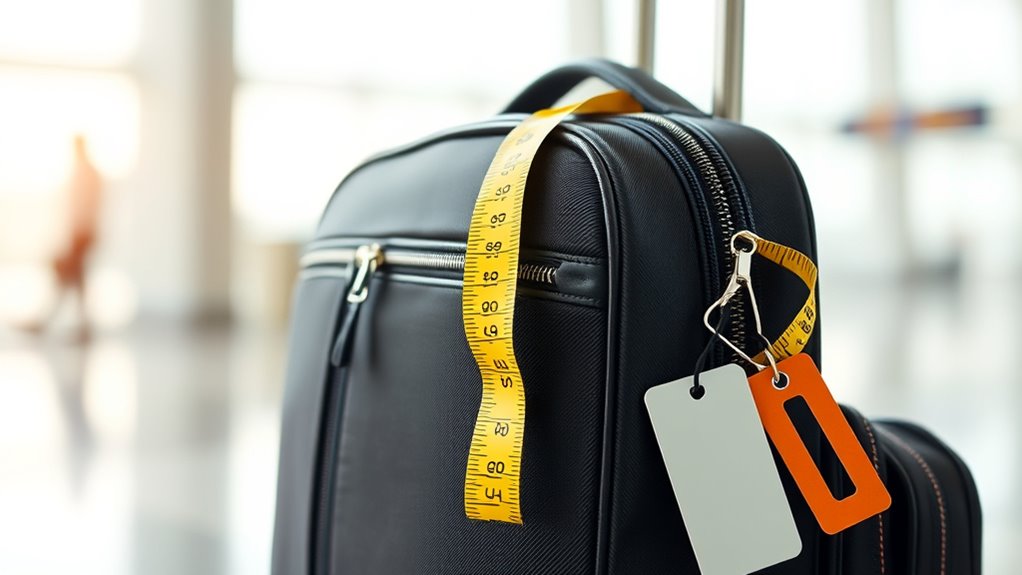
To confirm your carry-on bag meets airline regulations, start by gathering the right tools: a tape measure or ruler and a flat surface. Lay your bag flat to guarantee accurate measurements. For soft-sided bags, compress them slightly to get an accurate reading without overstuffing.
Begin measuring from the outermost points of the bag’s length, width, and height. Remember to take into account various bag shapes; rounded edges can affect measurements, so measure the widest parts.
Note down the dimensions, and double-check them with your measuring tools for accuracy. If your bag has pockets or compartments, measure those too, as they can add to the overall size.
Finally, compare your measurements against airline guidelines to verify compliance. Following these tips will help you avoid surprises at the airport and ensure a smoother travel experience.
Popular Carry-On Bag Types and Their Dimensions
When choosing a carry-on bag, it’s essential to know the most popular types and their typical dimensions. Soft sided bags often range from 22 to 24 inches in height, making them flexible enough to fit in tight spaces. In contrast, hard shell luggage usually has similar dimensions but offers more protection for fragile items.
Regarding backpack dimensions, you’ll typically find them ranging from 18 to 22 inches, perfect for travelers who prefer hands-free convenience.
When making suitcase comparisons, keep in mind that most airlines allow a maximum dimension of 22 x 14 x 9 inches for standard carry-ons. This measurement gives you a good idea of what will fit in the overhead compartment.
Knowing these dimensions helps you choose the right bag for your needs, ensuring a smoother travel experience.
Choosing the Right Carry-On Bag
Budget considerations are vital; compare brands to find the best quality within your price range. Pay attention to compartment features, as a well-organized bag can improve travel ease and keep your essentials at hand.
Don’t forget about weight limits, which can vary by airline. Choosing a lightweight bag can save you from extra fees and stress. Ultimately, balancing functionality with aesthetics will guarantee you pick a carry-on that suits both your needs and style.
Essential Items to Pack in Your Carry-On Bag
Packing your carry-on bag with the right essentials can make all the difference during your travels. Start with your toiletry essentials: a travel-sized toothbrush, toothpaste, deodorant, and any medications you need. Keep them organized in a clear, resealable bag to breeze through security checks.
Next, don’t forget your travel snacks. Whether it’s granola bars, nuts, or dried fruit, having something to munch on can keep your energy up and make the journey more enjoyable.
Don’t overlook travel snacks; granola bars, nuts, or dried fruit can keep your energy up and enhance your journey.
Also, pack a light sweater or scarf; planes can get chilly. A portable charger for your devices is vital too, especially for long flights. Finally, include a book or magazine to help pass the time.
With these essentials in your carry-on, you’ll be well-prepared and comfortable, ready to enjoy your trip as soon as you board!
Maximizing Space in Your Carry-On Bag
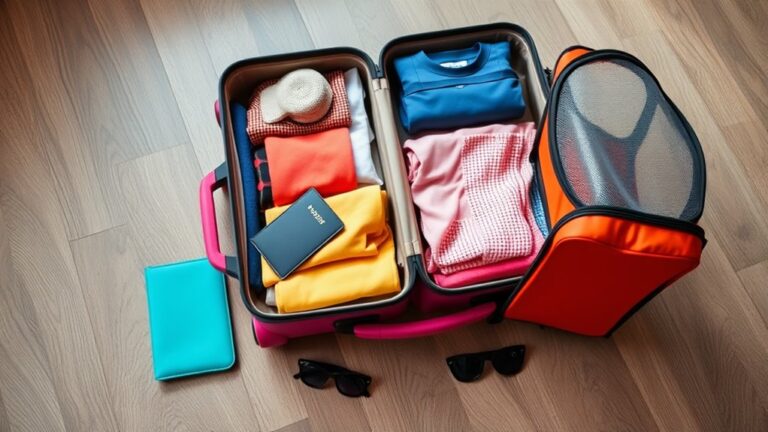
If you want to make the most of your carry-on bag, try using packing cubes. They’re great for keeping your items organized and compact. These simple tools can help you fit more essentials without making it hard to find what you need. Plus, adding in some essential travel accessories can make your packing even easier and more efficient.
Packing Cubes Benefits
While it might seem challenging to fit everything you need into a carry-on bag, using packing cubes can make a world of difference. These handy organizers improve packing efficiency and simplify travel organization. By compartmentalizing your items, you can maximize space and keep everything tidy.
Here’s a quick look at how packing cubes can help:
| Benefit | Description | Result |
|---|---|---|
| Space Maximization | Compresses clothes | Fits more items |
| Easy Access | Quick retrieval of essentials | Saves time |
| Organization | Keeps items categorized | Reduces clutter |
| Versatility | Various sizes for different items | Customizable packing |
| Wrinkle Reduction | Minimizes clothing wrinkles | Looks fresh on arrival |
With packing cubes, you’ll travel smarter and more organized!
Essential Travel Accessories
When you’re gearing up for a trip, having the right travel accessories can make all the difference in maximizing your carry-on space. Start with packing essentials like compression bags to shrink your clothes and make room for more items.
Don’t forget about travel gadgets such as portable chargers and multi-purpose tools; they save space and improve your travel experience. A lightweight toiletry bag with travel-sized containers is vital for organization and compliance with airline regulations.
Moreover, consider a compact travel blanket for comfort during long flights. By choosing the right accessories, you can optimize every inch of your carry-on, ensuring you have everything you need without the hassle of overpacking. Happy travels!
Are There Alternatives to Traditional Carry-On Bags?
Have you ever considered alternatives to traditional carry-on bags? If you’re looking for something different, there are plenty of alternative options. Travel backpacks are a great choice, featuring compact designs that help you maximize space while keeping your hands free.
For those who prefer rolling luggage, wheeled options can make maneuvering through airports a breeze. Garment bags are another fantastic alternative, especially if you’re traveling for business and need to keep your clothes wrinkle-free.
They often fit neatly in overhead compartments while allowing you to carry more personal items. Additionally, some brands offer hybrid bags that combine the best features of both backpacks and wheeled luggage, giving you versatility for various travel styles.
Why Knowing Carry-On Restrictions Matters
Choosing the right carry-on alternative can greatly improve your travel experience, but understanding carry-on restrictions is just as important. Knowing these regulations not only boosts travel convenience but also guarantees packing efficiency and compliance with airline policies. Here’s why you should pay attention:
- Avoid Baggage Fees: Confirming your carry-on meets size compliance helps you dodge unexpected charges.
- Improve Luggage Security: Knowing what you can bring allows for better organization and security of your belongings.
- Boost Travel Comfort: A well-packed bag makes travel smoother, letting you focus on enjoying your trip rather than worrying about your luggage.
Each airline has different policies, so being informed aids in smooth travel preparation. Don’t let airline differences catch you off guard; understanding these nuances will lead to a more enjoyable journey.
Frequently Asked Questions
Can I Bring a Personal Item in Addition to My Carry-On Bag?
Yes, you can usually bring a personal item in addition to your carry-on bag. Most airlines have personal item guidelines that allow you to carry something like a backpack, purse, or laptop bag.
Just make sure your carry-on and personal item fit within the specified baggage size limits. Check your airline’s policy for exact dimensions, but typically, your personal item should fit under the seat in front of you. Happy travels!
What Should I Do if My Carry-On Doesn’t Meet Airline Requirements?
If your carry-on doesn’t meet airline requirements, don’t panic! Consider carry-on alternatives like a smaller bag or a backpack. You can also review your packing strategies. Remove non-essential items or wear bulkier clothes.
If you’re close to the limit, try compressing your items with packing cubes. Finally, check if the airline offers any flexibility or allows you to gate-check your bag. Adjusting can save you stress at the airport!
Are There Weight Limits for Carry-On Bags?
Yes, there are weight limits for carry-on bags, and they vary by airline. You need to check the specific carry-on restrictions for your flight to avoid any surprises.
Exceeding the weight limit might lead to baggage fees or require you to check your bag instead. Always weigh your bag before heading to the airport to guarantee it meets the requirements, so you can travel hassle-free and enjoy your trip!
Can I Use a Backpack as My Carry-On?
Absolutely, you can use a backpack as your carry-on! In fact, about 60% of travelers prefer backpacks for their versatility.
When choosing a backpack type, opt for one that fits airline dimensions. For packing tips, roll your clothes to save space and keep essentials handy.
Make sure to distribute weight evenly to avoid strain. With the right backpack, you’ll navigate the airport with ease and comfort, ready for your adventure!
How Can I Find Specific Airline Carry-On Policies?
To find specific airline carry-on policies, start by visiting the airline’s website. They usually provide detailed information about size limits, baggage fees, and other important guidelines. You can also check their FAQs for quick answers.
If you’ve got questions, don’t hesitate to contact customer service. Knowing these details ahead of time will save you money and hassle at the airport. Plan your trip smartly and enjoy your travels!
Conclusion
In conclusion, sticking to standard carry-on bag measurements simplifies your travel experience. By understanding regulations and measuring meticulously, you can avoid stressful surprises at the airport.
Packing strategically and prioritizing essentials will maximize your bag’s potential. Remember, knowing your carry-on limits not only improves convenience but also guarantees a smoother journey.
So, adopt efficient packing and let your travel plans take flight without the hassle of hefty fees or frustrating frustrations!