Standard Dimensions for Carry-On Bag Size
Finding the perfect carry-on bag can feel like a real challenge. You want something that fits airline rules, holds all your essentials, and saves you from extra fees.
If you’ve ever struggled with sizing your luggage or worried about unexpected baggage charges, you’re not alone. Many travelers face the same hassle when trying to meet those strict airline size limits.
Most airlines allow carry-on bags up to 22 x 14 x 9 inches, though Southwest Airlines permits slightly larger bags at 24 x 16 x 10 inches.
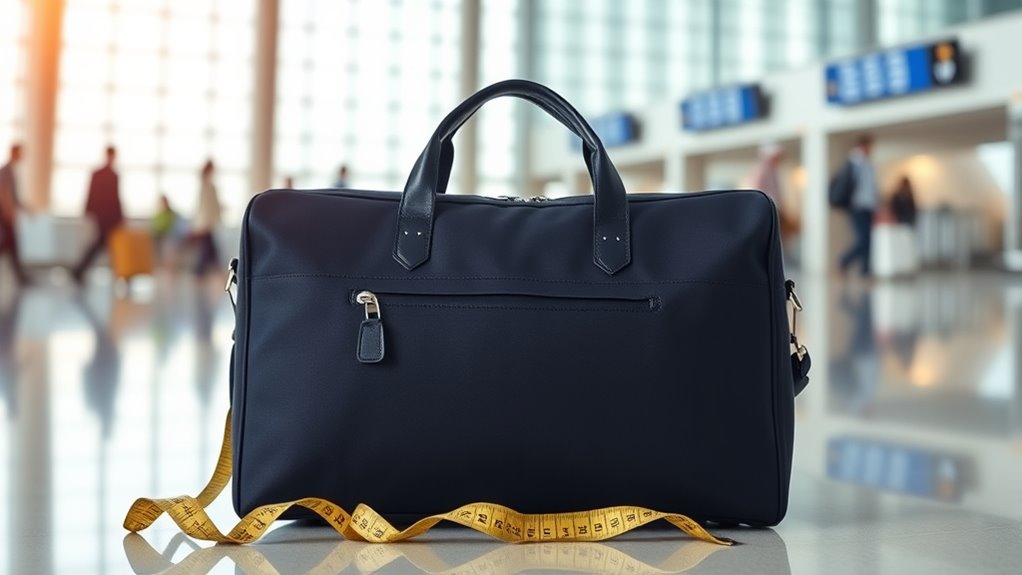
Budget carriers like Spirit often enforce smaller dimensions, sometimes as tight as 18 x 12 x 6 inches. It’s crucial to measure your bag accurately to avoid surprise fees. Using a soft measuring tape can help guarantee your bag fits within these limits.
Want to maximize your carry-on experience? There’s more to investigate!
Key Takeaways
- Most airlines allow carry-on bags up to 22 x 14 x 9 inches for domestic flights.
- Southwest Airlines permits slightly larger bags, measuring 24 x 16 x 10 inches.
- International airlines typically limit carry-on dimensions to 21 x 13 x 7 inches.
- Low-cost carriers may enforce smaller dimensions, sometimes as small as 18 x 12 x 6 inches.
- Always confirm specific airline policies to avoid extra fees for oversized bags.
What Are Standard Carry-On Bag Dimensions?
When you’re packing for a trip, what should you know about standard carry-on bag dimensions? Most airlines allow carry-on bags measuring up to 22 x 14 x 9 inches. Staying within these limits helps avoid extra fees and guarantees your bag fits in the overhead compartment or under the seat.
To maximize bag organization, prioritize your carry-on essentials. Start with your most important items, like travel documents, electronics, and a change of clothes. Use packing cubes or pouches to separate items, making it easier to grab what you need without rummaging through your bag.
Also, consider the weight of your carry-on; most airlines have weight restrictions, too. By understanding these dimensions and organizing your bag effectively, you’ll streamline your travel experience and keep everything you need close at hand. Happy travels!
Common Carry-On Size Limits by Airline
Airlines have varying carry-on size limits, which can affect your travel plans. Understanding these carry-on restrictions is vital for a smooth journey. For example, Southwest Airlines allows a maximum of 24 x 16 x 10 inches, while American Airlines typically has a limit of 22 x 14 x 9 inches.
Meanwhile, budget carriers like Spirit might enforce stricter dimensions, often requiring you to pay extra for larger bags. When making airline comparisons, it’s important to check each airline’s specific guidelines before packing.
Some airlines may even limit the weight of your carry-on, adding another layer to their restrictions. If you’ve got a favorite bag, confirm it fits within the allowed dimensions to avoid last-minute hassles at the airport. Staying informed about these size limits can save you time and stress, allowing you to focus on enjoying your trip.
Measuring Your Carry-On Bag: A Step-By-Step Guide
Ready to confirm your carry-on bag meets airline requirements? Start by gathering a soft measuring tape or a ruler. First, measure the height of your bag from the bottom to the top.
Next, measure the width across the widest part. Finally, measure the depth from the front to the back.
Make certain to document the bag dimensions in inches or centimeters, depending on your airline’s specifications. Use these measuring techniques carefully; even small discrepancies can lead to issues at the gate.
Once you’ve got your measurements, compare them to the airline’s carry-on size limits. If your bag exceeds these dimensions, it might be time to downsize.
Tips for Maximizing Carry-On Space
Maximizing your carry-on space can make a world of difference during your travels. To help you pack efficiently, consider these tips:
Maximizing your carry-on space can transform your travel experience, making packing efficient and hassle-free.
- Use packing cubes: These help you organize your clothing and make it easy to find items without rummaging.
- Try vertical packing: Instead of stacking clothes flat, roll them and pack vertically to save space and reduce wrinkles.
- Utilize compression bags: These can considerably reduce the volume of your clothing, allowing for better weight distribution and more room for personal items.
- Incorporate accessory pouches: Keep smaller items organized and easily accessible, maximizing your travel organization.
Also, opt for multi-functional bags to further streamline your packing process. By following these tips, you’ll make the most of your carry-on, ensuring a smoother travel experience without the hassle of overpacking.
Essential Items to Pack in Your Carry-On Bag
When packing your carry-on bag, it’s crucial to include essential items that will keep you comfortable and prepared during your journey. Start with your travel documents: boarding passes, identification, and any necessary visas, easily accessible for quick retrieval.
Next, don’t forget your essential toiletries. A small toiletry bag should contain travel-sized items like toothpaste, a toothbrush, deodorant, and facial wipes. These will help you freshen up, especially on long flights.
Consider packing a lightweight sweater or scarf for fluctuating cabin temperatures. A portable phone charger is also a lifesaver, ensuring your devices stay powered for entertainment or navigation.
If you wear glasses, keep a case and lens cleaner handy. Finally, snacks can make a difference, so stash some non-perishable treats to keep hunger at bay. With these essentials, you’ll travel with ease and confidence.
How Domestic and International Carry-On Sizes Differ
When you’re packing your carry-on, it’s important to keep in mind that domestic and international airlines don’t always play by the same rules. What fits perfectly on a domestic flight might actually be too big for an international carrier. So, knowing these size differences ahead of time can really save you from last-minute stress at the airport.
Domestic Airline Regulations
Understanding carry-on bag regulations is essential for any traveler, as size requirements can vary considerably between domestic and international airlines. When flying domestically, you should familiarize yourself with specific airline policies and baggage guidelines.
Here are four key points to remember:
- Size Limits: Most domestic airlines allow carry-ons up to 22 x 14 x 9 inches.
- Weight Restrictions: Some airlines impose weight limits, typically around 15 to 25 pounds.
- Personal Items: Don’t forget to account for a personal item, usually a smaller bag like a purse or laptop case.
- Gate Check: Be prepared for the possibility of having to gate-check your bag if space runs low.
International Airline Guidelines
Carrying on a bag for international flights can be quite different from domestic travel. Each airline has unique baggage policies that you need to keep in mind. Here are some helpful international travel tips to help you navigate these differences:
| Airline | Carry-On Size Limit |
|---|---|
| Airline A | 22 x 14 x 9 inches |
| Airline B | 21 x 13 x 8 inches |
| Airline C | 23 x 15 x 10 inches |
Before your trip, always check your airline’s specific guidelines to avoid surprises at the gate. Some airlines might even have weight limitations or additional fees. Understanding these policies guarantees a smoother journey and helps you pack efficiently. Happy travels!
Size Limit Variations
Size limits for carry-on bags can vary considerably between domestic and international flights, so it’s essential to know the specifics before you travel. Different airlines enforce specific size regulations, often influenced by regional differences. Here’s what you might encounter:
- Domestic Flights: Typically allow bags up to 22 x 14 x 9 inches.
- International Flights: Often limit bags to 21 x 13 x 7 inches.
- Low-Cost Carriers: May have stricter regulations, allowing bags as small as 18 x 12 x 6 inches.
- Regional Airlines: Sometimes impose even smaller dimensions, around 16 x 10 x 8 inches.
Knowing these variations can save you from unexpected fees or the hassle of checking your bag at the gate. Always check your airline’s specific size regulations before packing!
Carrying a Laptop: Size Considerations for Your Carry-On Bag
While traveling, it’s vital to reflect on how your laptop fits into your carry-on bag. First, check your bag’s dimensions to guarantee it meets airline size regulations. A snug fit can help with laptop protection, preventing it from shifting during transit.
Next, consider bag organization. Look for compartments specifically designed for electronic devices. These padded sections not only secure your laptop but also keep it separate from other items, minimizing the risk of scratches or damage.
Consider compartments designed for electronics; they secure your laptop and protect it from scratches by keeping it separate from other items.
Additionally, think about accessibility. You’ll want your laptop easily reachable for security checks, so a bag with a quick-access pocket can be a game changer.
Finally, remember to pack essential accessories like chargers and headphones without overcrowding your bag. Balancing size limitations with the need for proper laptop protection and efficient bag organization will make your travel experience smoother and more enjoyable.
How Size Limits Impact Budget Airlines
When you fly with budget airlines, size limits on carry-on bags can really hit your wallet. It’s important to understand their fee structures so you can pack smarter and dodge those surprise charges. You’ll want to make the most of your space while keeping costs low. So, let’s take a look at some effective packing strategies that can help.
Fee Structures Explained
Understanding how fee structures work is essential, especially if you’re flying with budget airlines that often enforce strict carry-on bag size limits. These airlines have specific policies that can impact your wallet considerably. Here’s what you need to keep in mind:
- Size Restrictions: Most budget airlines have maximum dimensions for carry-ons, typically around 22 x 14 x 9 inches.
- Fees for Oversized Bags: If your bag exceeds the limit, you might face hefty charges, often exceeding the ticket price.
- Priority Boarding Options: Some airlines allow you to pay for priority boarding, which lets you bring a larger bag.
- Free Personal Item: Typically, you can bring a small personal item for free, but it must fit under the seat.
Being aware of these can help you avoid unexpected expenses.
Packing Strategies for Travelers
Maneuvering carry-on size limits can be tricky, especially with budget airlines that enforce strict regulations. To maximize your space, use packing hacks like rolling your clothes instead of folding them. This method not only saves space but also minimizes wrinkles.
Prioritize your travel essentials; think about what you truly need and leave behind non-essentials to lighten your load. Consider using packing cubes to organize items efficiently, making it easier to access your essentials on the go.
Don’t forget to wear your bulkiest shoes and jacket to save room in your bag. By planning carefully, you can navigate size limits and avoid extra fees, ensuring your travel experience is smooth and stress-free.
How to Avoid Fees by Understanding Size Restrictions
To avoid unexpected fees, it’s crucial to know your airline’s carry-on bag size restrictions. Many travelers fall prey to baggage misconceptions, assuming all bags are treated similarly. Understanding the dimensions can save you money and stress. Here are some tips to keep in mind:
- Check the airline’s website for specific size limits before you pack.
- Use a measuring tape to verify your bag fits within the allowed dimensions.
- Prioritize your carry-on essentials by packing only what you need for the flight.
- Consider using a soft-sided bag, which can be more flexible in fitting into overhead bins.
Alternatives to Traditional Carry-On Luggage
With size restrictions in mind, exploring alternatives to traditional carry-on luggage can elevate your travel experience. Soft-sided options like travel totes or wheeled duffels can maximize your packing space without sacrificing style.
Backpack choices are versatile and can easily fit under your seat, making them a practical selection for quick access. To stay organized, consider using packing cubes or compression sacks, which help you efficiently pack your clothing and essentials.
Expandable bags are also a great idea, offering flexibility for those last-minute items. Stylish carry-ons don’t have to compromise functionality; many designs combine aesthetics with practicality.
Frequently Asked Questions
Can I Bring a Backpack and a Carry-On Bag?
Yes, you can usually bring a backpack and a carry-on bag. Just make certain your backpack types and carry-on fit within the airline’s size limits.
Packing tips include using packing cubes to maximize space and keeping essentials easily accessible in your backpack. Consider the weight of each bag, too, as airlines often have restrictions.
What Happens if My Carry-On Exceeds Size Limits?
If your carry-on exceeds size limits, you might face carry-on penalties, like having to check your bag at the gate, often for an additional fee. This can delay your boarding and add stress to your travel.
To avoid this, measure your bag before heading to the airport. Use travel tips like packing smartly or choosing a bag that fits within the allowed dimensions to guarantee a smoother journey.
Are Soft-Sided Bags More Flexible for Carry-On Restrictions?
Yes, soft-sided bags offer more flexibility for carry-on restrictions. Their design allows you to compress and shape them to fit into tight spaces, making packing flexibility a significant advantage.
Unlike rigid bags, you can easily squish a soft-sided bag to meet size limits, which can be a lifesaver at the gate. Plus, they often have additional pockets for organization, helping you maximize your packing while staying within airline guidelines.
Do Weight Restrictions Apply to Carry-On Bags?
Yes, weight restrictions do apply to carry-on bags. Airlines often set limits on carry-on weight, so you’ll need to double-check your airline’s guidelines.
If your bag exceeds the weight limit, you might face baggage fees or have to check it in. To avoid surprises, weigh your bag at home and make sure it meets the requirements.
Staying within the carry-on weight limit can save you time and extra costs at the airport.
Can I Bring Liquids in My Carry-On?
Yes, you can bring liquids in your carry-on, but you need to follow liquid regulations. Make sure each container is 3.4 ounces (100 milliliters) or less, and all containers must fit in a quart-sized bag.
For travel tips, pack your liquids at the top of your bag for easy access during security checks. Remember, exceptions exist for medications and baby items, so double-check your specific airline’s guidelines before you head out!
Conclusion
In the end, knowing the standard dimensions for carry-on bags can save you both hassle and money. You might find it surprising how often your favorite airline’s size limits align perfectly with your go-to bag, making packing a breeze.
By being mindful of these restrictions, you can avoid unexpected fees and enjoy a smoother travel experience. This little knowledge can turn a stressful journey into a seamless adventure, letting you focus on the excitement ahead.
Remember, understanding the standard dimensions for carry-on bags is key to stress-free travel.