What Size Is a Carry Bag for Airlines?
Struggling to find the perfect carry bag size for airlines can be frustrating, especially when each airline seems to have its own rules. You’re not alone—many travelers wrestle with confusing size limits and worry about extra fees at the gate.
Choosing the right carry bag can make your travel experience smoother and less stressful.
Most airlines allow carry-on bags up to 22 x 14 x 9 inches, with some variations like Southwest’s 24 x 16 x 10 inches.
You’ll usually find weight limits ranging from 15 to 50 lbs, depending on the airline.
Always measure your bag correctly, excluding wheels and handles, to avoid extra fees at the gate.
If you’re unsure about specific airline policies or need tips on efficient packing, there’s much more to investigate.
Key Takeaways
- Standard carry-on bag dimensions are typically 22 x 14 x 9 inches for most airlines, like American and Delta.
- Southwest Airlines allows slightly larger dimensions at 24 x 16 x 10 inches for carry-on bags.
- Weight limits for carry-ons usually range from 40 to 50 lbs, varying by airline.
- Personal items should not exceed around 18 x 14 x 8 inches and must comply with airline restrictions.
- Accurate measurements and packing strategies help ensure compliance with airline carry-on policies and avoid fees.
What Are Airline Carry-On Size Limits?
When planning your trip, knowing airline carry-on size limits can save you from unnecessary hassles at the airport. Each airline has specific luggage restrictions, so it’s essential to check these before packing.
Typically, a standard carry-on bag measures around 22 x 14 x 9 inches, but this can vary. If your bag exceeds these dimensions, you might face carry-on fees, which can add unexpected costs to your travel budget.
A standard carry-on bag is usually 22 x 14 x 9 inches; exceeding this may lead to extra fees.
To avoid these fees, measure your bag carefully and confirm it fits within the guidelines. Remember, some airlines also have weight limits, so you’ll want to keep that in mind as you pack.
Familiarizing yourself with these carry-on size limits not only streamlines your airport experience but also helps you pack more efficiently. By staying informed, you can enjoy a smoother journey while maximizing your luggage space.
Common Dimensions for Major Airlines
Knowing the common dimensions for major airlines can help you choose the right carry-on bag without any guesswork. Each airline has its own standards, and understanding these can make your travel smoother.
Here’s a quick look at some popular airlines and their carry-on size limits for easy carry-on comparisons:
| Airline | Max Dimensions (inches) | Weight Limit (lbs) |
|---|---|---|
| American Airlines | 22 x 14 x 9 | 40 |
| Delta Airlines | 22 x 14 x 9 | 40 |
| Southwest Airlines | 24 x 16 x 10 | 50 |
How to Measure Your Carry Bag Correctly
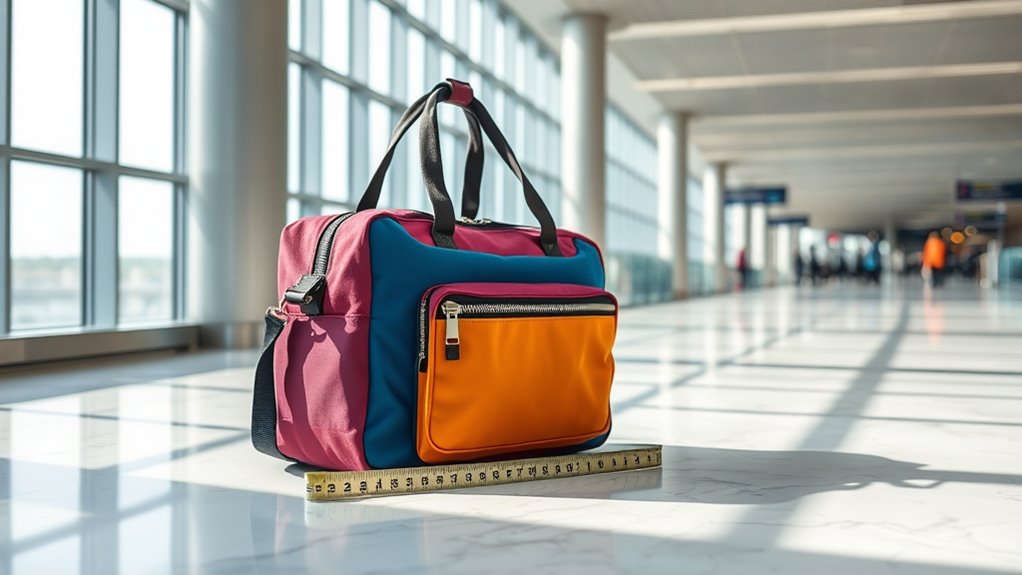
Understanding the size limits of different airlines is just the first step; measuring your carry bag accurately is key to ensuring it meets those requirements. To get the correct bag dimensions, follow these simple steps using appropriate measuring tools:
- Length: Lay your bag flat and measure from one end to the other, excluding any wheels or handles.
- Width: Measure the widest part of the bag, again ensuring you avoid adding any protrusions.
- Height: Stand the bag upright and measure from the bottom to the top, without including any attachments.
Make sure to note these dimensions in inches or centimeters, depending on the airline’s requirements. Double-check your measurements to avoid surprises at the airport. This way, you can confidently pack your carry bag, knowing it’s within the size limits set by your airline.
Tips for Packing Efficiently in a Carry Bag
Packing efficiently in your carry bag can really make a difference when you’re traveling. First off, try to choose lightweight materials—that way, you save space and keep your bag from getting too heavy.
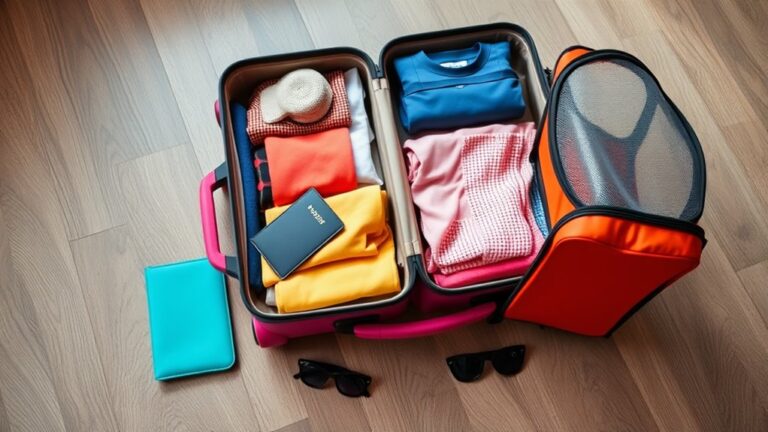
Also, don’t forget about packing cubes! They help keep everything organized and rolling your clothes instead of folding them can make your items fit more compactly. It’s all about making the most of the space you have.
Choose Lightweight Materials
While you might be tempted to fill your carry bag with every essential item, opting for lightweight materials can make a significant difference in your travel experience. Choosing the right fabric types not only reduces weight but also improves your durability comparison against heavier materials.
Here are three lightweight options to evaluate:
- Nylon: Known for its strength and water resistance, nylon is a popular choice for carry bags.
- Polyester: Often less expensive, polyester offers good durability and comes in various colors and designs.
- Ripstop Fabric: This innovative material is lightweight yet incredibly strong, making it perfect for frequent travelers.
Utilize Packing Cubes
Using packing cubes can transform how you organize your carry bag, making your travel experience smoother and more efficient. These handy tools offer numerous packing benefits, helping you maximize space while keeping your items easily accessible.
By sorting your clothes, toiletries, and accessories into separate cubes, you’ll enjoy cube organization that minimizes chaos during your trip. Instead of rummaging through a jumbled bag, you can simply pull out the specific cube you need. This not only saves time but also helps you pack more strategically.
Plus, you can use different colored cubes to categorize items for quick identification. Adopt packing cubes, and simplify your travel routine with this smart organizational solution!
Roll Clothes Efficiently
Transform your packing game by rolling clothes instead of folding them. This simple switch not only saves space but also minimizes wrinkles. Here are three effective roll techniques to improve your space optimization:
- The Basic Roll: Lay the item flat, fold in the sleeves, and roll from the bottom to the top. This is great for t-shirts and casual wear.
- The Bundle Roll: Wrap smaller items inside larger ones. Start with the largest piece, layer smaller items on top, and then roll everything together for compact packing.
- The Army Roll: Roll tightly and secure with rubber bands. This technique keeps clothes snug and is great for travel.
What Counts as a Personal Item?
When you travel, understanding what counts as a personal item can save you time and hassle at the airport. Airlines typically allow one personal item that fits under the seat in front of you, so knowing the rules helps you avoid surprises.
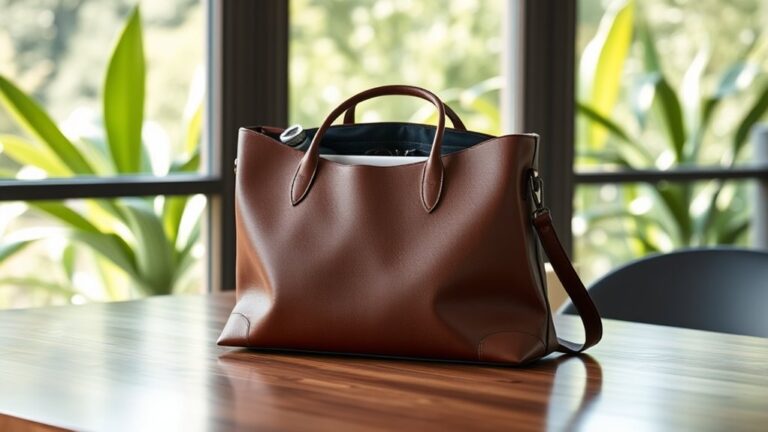
Common personal item examples include a small backpack, purse, laptop bag, or tote. It’s essential to check the specific personal item restrictions for your airline, as dimensions can vary. Usually, the limit is around 18 x 14 x 8 inches, but it’s always best to confirm.
Common personal items include small backpacks, purses, and laptop bags. Always verify your airline’s specific size restrictions for a smooth travel experience.
Avoid cramming oversized bags, as you might end up checking them in and incurring extra fees. Remember, your personal item should hold essentials like your passport, snacks, or a book to keep you comfortable during the flight.
Keep it light and organized, and you’ll breeze through check-in and boarding with ease.
How Carry-On Policies Differ by Flight Type
Airlines often have varying carry-on policies based on flight type, which can catch travelers off guard. For example, Jet Blue policies differ considerably between domestic and international flights. To help you navigate these differences, consider the following:
- Domestic Flights: Typically allow one carry-on and one personal item, with size restrictions often around 22 x 14 x 9 inches.
- International Flights: May have stricter size limits and weight allowances, so check the specific airline’s guidelines before packing.
- Budget Airlines: Often charge extra for carry-ons, so be aware of their policies to avoid unexpected fees.
Understanding these distinctions can save you time and hassle at the airport. Always double-check your airline’s specific regulations before you fly to confirm your carry-on meets their requirements.
If Your Bag Exceeds Size Limits
Packing your carry-on can be tricky, especially if you accidentally exceed the size limits. If your bag is too big, you might face excess baggage fees that can add a hefty charge to your travel budget. To avoid these unexpected costs, it’s best to measure your bag before heading to the airport.
If you find yourself with an oversized bag, consider alternative storage options. Many airports offer luggage storage services, allowing you to leave your bag for a few hours or even days. This can be a great way to explore without dragging around excess luggage.
Alternatively, you could check your bag instead, but be aware that this might involve waiting at baggage claim. Whatever route you choose, addressing size issues ahead of time will help guarantee a smoother travel experience.
Key Airline Policies on Carry-On Sizes You Must Know
Understanding carry-on size policies is essential for a hassle-free travel experience, especially since each airline has its own specific guidelines. Familiarizing yourself with these airline regulations can save you time and stress at the airport. Here are three key points regarding luggage restrictions you must know:
Understanding carry-on size policies is crucial for stress-free travel, as each airline has unique guidelines to follow.
- Size Limits: Most airlines allow carry-ons up to 22 x 14 x 9 inches, but always check your airline’s website for exact measurements.
- Weight Restrictions: Some airlines impose weight limits on carry-ons, often ranging from 15 to 25 pounds. Keep an eye on this to avoid extra fees.
- Personal Items: In addition to your carry-on, you’re usually allowed a personal item like a backpack or purse. Confirm it fits under the seat in front of you.
Packing Strategies for Maximum Efficiency
Knowing the carry-on size limits is just the first step in ensuring a smooth travel experience. To maximize your packing efficiency, consider using compression bags. They help you save space by reducing the volume of your clothing, allowing you to fit more into your carry-on. Rolling your clothes instead of folding them can also create extra room and minimize wrinkles.
Additionally, travel organizers can be a game changer. They keep your items sorted and easy to access, so you won’t waste time rummaging through your bag. Use packing cubes to compartmentalize clothing, toiletries, and electronics. This way, you can quickly grab what you need without disrupting everything else.
Lastly, remember to leave some space for souvenirs or any unexpected items you might pick up during your trip. With these strategies, you’ll travel light and stay organized, making your journey hassle free.
Essential Items for Compliant Carry-On Packing
When you’re getting ready for your trip, ensuring your carry-on meets airline regulations is essential for a hassle-free journey. To help you with bag organization, focus on these travel essentials:
- Liquids and Gels: Keep your toiletries in containers of 3.4 ounces or less, all fitting in a quart-sized clear bag.
- Electronics: Pack your laptop, tablet, and chargers separately for easy access during security checks.
- Clothing and Comfort Items: Include a change of clothes and a lightweight blanket or travel pillow for long flights.
Frequently Asked Questions
Can I Bring a Backpack as a Carry Bag?
Yes, you can bring a backpack as a carry bag! Just make sure it meets your airline’s policies regarding backpack dimensions.
Most airlines allow backpacks that fit within certain size limits, typically around 22 x 14 x 9 inches. Check your airline’s specific guidelines before packing, as dimensions can vary.
Are There Weight Limits for Carry-On Bags?
Yes, there are weight limits for carry-on bags, and they vary by airline. While you might think your bag’s size fits the carry-on dimensions, exceeding the weight can lead to extra fees or forced checking.
It’s crucial to check your airline’s policies before packing. To avoid surprises, weigh your bag at home and verify it meets both size and weight requirements, so you can travel smoothly without any hassle.
What Happens if My Bag Is Overweight?
If your bag’s overweight, you’ll likely face overweight fees at the check-in counter. Airlines typically charge for bags exceeding the weight limit, which can add up quickly.
To avoid these costs, consider packing strategies like using a lightweight suitcase, distributing weight evenly, or wearing heavier items during travel. You can also repack at the airport if necessary, shifting items to your personal bag to stay within limits.
Can I Bring a Laptop Bag With My Carry-On?
Yes, you can usually bring a laptop bag along with your carry-on. Most airlines allow a personal item like a laptop bag, as long as it fits their size restrictions.
Typically, the laptop size shouldn’t exceed the dimensions set by the airline, so check their policies before you pack. Just keep in mind that both your carry-on and laptop bag should be manageable and fit in the overhead bin or under the seat in front of you.
Are There Restrictions for Liquids in Carry Bags?
You can bring liquids in your carry bag, but there are strict liquid regulations. Did you know that around 90% of travelers aren’t aware of the 3-1-1 rule?
At security screening, you need to keep liquids in containers of 3.4 ounces or less, all packed in a single quart-sized bag. Make sure your bag’s easily accessible, so your screening process goes smoothly.
Stay informed to avoid any delays!
Conclusion
To sum up, knowing carry-on size limits can save you from the stress of unexpected fees and delays. You might think packing light isn’t possible, but with smart strategies, you can fit everything you need into your carry bag.
Imagine breezing through security and settling into your seat without hassle. By following these guidelines about the size of a carry bag for airlines, you’ll enjoy a smoother travel experience.
This allows you to focus on the adventure ahead instead of worrying about your luggage. Happy travels!