What Is the Size of a Carry Bag for Major Airlines?
Struggling to find a carry bag that fits airline requirements? You’re not alone. Many travelers wrestle with oversized bags that lead to unexpected fees or last-minute check-ins.
Knowing the right size can save you stress and money, making your journey smoother from start to finish.
Most major airlines allow carry-on bags measuring about 22 x 14 x 9 inches. If your bag exceeds these dimensions, you might face extra fees or need to check it in.
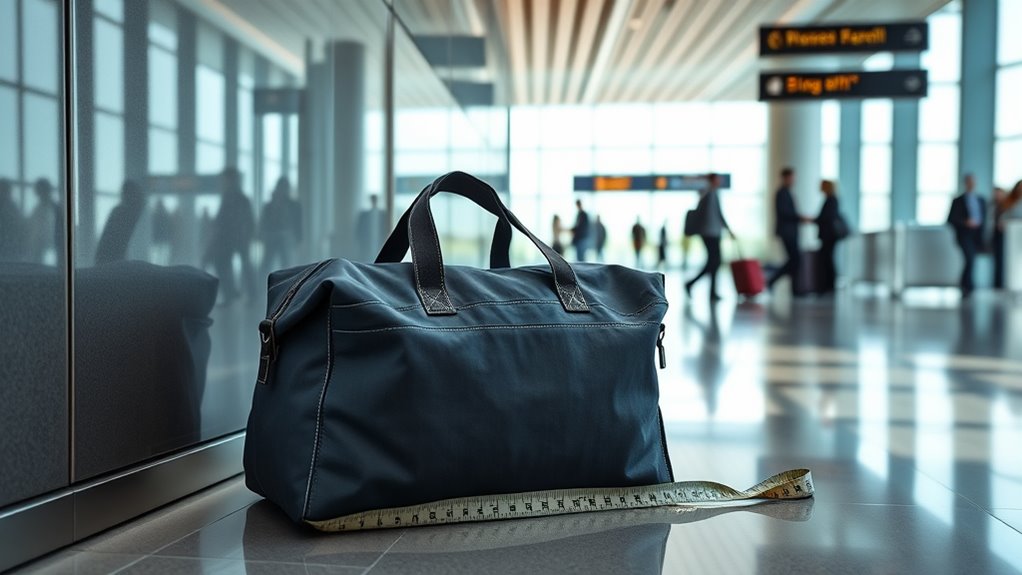
It’s important to measure your bag, including wheels and handles, to guarantee compliance.
We’ve got tips on effective packing and choosing the right carry-on to make your travel easier.
Stick with us to uncover more insights on carrying your essentials hassle-free!
Key Takeaways
- Most major airlines have a standard carry-on size limit of approximately 22 x 14 x 9 inches.
- Carry-on weight restrictions generally range from 15 to 22 pounds, varying by airline.
- Each airline may allow one additional small personal item with its own size limits.
- It’s crucial to check specific airline guidelines for exact size and weight restrictions to avoid fees.
- Use a soft measuring tape to accurately measure your bag, including wheels and handles.
Understanding Carry-On Bag Size Limits
When packing for your flight, knowing the size limits for carry-on bags is essential. Each airline has specific dimensions, and exceeding them could mean extra fees or having to check your bag. To avoid these hassles, familiarize yourself with the general guidelines before you start packing.
As you prepare, consider your travel essentials. Prioritize items you’ll need during the flight, like snacks, a water bottle, and entertainment. Effective bag organization helps you quickly access what you need. Use packing cubes or pouches to separate your essentials, keeping your bag neat and compliant with size requirements.
Key Dimensions for Major Airlines
Understanding specific size limits for carry-on bags can save you time and money. Most major airlines have a standard size limit of around 22 x 14 x 9 inches, but it’s vital to check with your airline, as dimensions can vary. Knowing these key dimensions helps you pack efficiently, ensuring your carry-on essentials fit comfortably.
Adopting smart packing strategies is essential. Use packing cubes to maximize space and keep your items organized. Remember, each airline may have weight restrictions too, which can impact how much you can bring onboard.
To avoid last-minute hassles at the gate, measure your bag before you travel and practice smart packing techniques. By understanding and adhering to these dimensions, you can breeze through airport security and focus on enjoying your trip, rather than worrying about checked baggage fees or lost luggage.
How to Measure Your Carry-On Bag
To guarantee your carry-on bag meets airline standards, it’s essential to measure it accurately. Knowing how to determine your bag dimensions will save you time and hassle at the airport. Here are some effective measuring techniques to verify your bag complies with airline requirements:
Use a soft measuring tape. This helps you wrap around the curved edges easily.
Measure length, width, and height. Always measure from the highest point, including wheels and handles.
Check the airline’s specific guidelines. Different airlines may have varying size restrictions.
Consider packing your bag. A fully packed bag can give you a better idea of its actual size.
Double-check with a ruler. If you don’t have a tape measure, a straight ruler can work for quick checks.
Debunking Myths About Carry-On Sizes
You might think all airlines have the same carry-on size limits, but that’s not the case. A lot of travelers have misconceptions about what’s allowed, which can cause some confusion at the gate. So, let’s clear up these common myths and take a closer look at how different airlines vary in their rules.
Common Misconceptions Explained
How often have you found yourself confused by the varying carry-on size rules of major airlines? You’re not alone! Let’s clear up some common misconceptions about carry-on sizes and debunk those carry-on myths.
All airlines have the same size limits: Each airline sets its own dimensions.
You can always fit a large bag: Overpacking can lead to extra fees.
Personal items don’t count: They often have size limits too!
Soft-sided bags are always better: Hard cases might fit in some spaces easier.
You can always gate-check large bags: Not all airlines allow that option.
Understanding these myths can help refine your packing strategies and guarantee a smoother travel experience.
Airline Size Variations
While it’s easy to assume that all airlines share similar carry-on size specifications, the reality is quite different. Each airline has its own rules, which can make packing your carry-on essentials a bit tricky.
For instance, some budget airlines have stricter limits compared to major carriers. You might find that what fits perfectly in one airline’s dimensions won’t be allowed on another.
Understanding these variations helps you choose the right luggage styles for your trip. Before you pack, always check the specific size guidelines for your airline to avoid surprises at the gate.
Weight Restrictions for Carry-On Bags
When you’re packing your carry-on, it’s important to keep the airline’s weight limits in mind because they can differ quite a bit. A lot of airlines stick to general global weight standards, but there are some exceptions and special cases you should be aware of. Knowing these rules ahead of time can really help you avoid any surprises when you get to the check-in counter.
Airline-Specific Weight Limits
Understanding airline-specific weight limits for carry-on bags is crucial for a smooth travel experience. Different airlines have varying policies, and knowing them can save you from unexpected baggage fees. Here are key points to take into account:
Weight limits: Most airlines allow 15-22 pounds for carry-ons.
Size restrictions: Dimensions often range from 22 x 14 x 9 inches.
Personal items: Usually, you can bring one additional small item, like a backpack or purse.
Exceptions: Certain airlines may have different rules for premium passengers.
Check-in options: If your bag exceeds limits, think about checking it in to avoid fees.
Always double-check your airline’s specific policies before packing to guarantee a hassle-free journey!
Global Weight Standards
Airline-specific weight limits can vary greatly, but there are some global standards that travelers should keep in mind. Generally, most airlines permit carry-on bags weighing between 7 to 10 kilograms (15 to 22 pounds). Staying within these limits helps you navigate international baggage policies more smoothly.
As global travel trends evolve, airlines increasingly enforce these weight restrictions to maximize cabin space and maintain passenger safety. Always check your airline’s specific guidelines before packing, as exceeding weight limits can lead to extra fees or the need to check your bag.
Exceptions and Special Cases
While most airlines enforce standard weight limits for carry-on bags, there are notable exceptions and special cases that travelers should be aware of. These unique situations often include special allowances that can make your journey easier. Here are some key points to examine:
Business Class Passengers are often allowed a heavier carry-on.
Children may bring baby gear like strollers that might not count toward weight limits.
Medical Equipment like essential medical devices often have exceptions.
Frequent Flyers who are elite members can enjoy additional weight allowances.
During Seasonal Travel, some airlines have different rules in peak seasons.
Understanding these exceptions can help you pack more efficiently and avoid any surprises at the airport. Always double-check with your airline for the most accurate information.
Tips for Maximizing Carry-On Space
To make the most of your carry-on space, it’s vital to pack strategically. Start by prioritizing your travel essentials. Use packing strategies like rolling clothes instead of folding them, which saves space and reduces wrinkles.
Consider using packing cubes to keep items organized and easily accessible.
Here’s a quick reference table for effective packing:
| Packing Strategy | Benefits |
|---|---|
| Roll Clothes | Saves space, minimizes wrinkles |
| Use Packing Cubes | Keeps items organized |
| Choose Lightweight Bags | Reduces overall weight |
| Limit Shoes | Opt for versatile options |
| Pack Multi-use Items | Maximizes functionality |
What If Your Bag Is Too Big?
Packing efficiently can sometimes lead to an overstuffed carry bag that exceeds airline size restrictions. If you find yourself in this situation, don’t panic. There are several bag alternatives and packing solutions to evaluate:
Repack: Open your bag and remove non-essential items.
Wear Bulky Clothing: Put on heavier layers to save space.
Use Compression Bags: These can help reduce the size of your clothing.
Examine a Smaller Bag: Switch to a more compact alternative that meets size limits.
Check Airline Policies: Know the exact dimensions allowed to avoid fees.
Effective Packing Techniques for Carry-Ons
Packing efficiently for your carry-on can really make all the difference on your trip. You know, using compression packing cubes is a great way to save space. Plus, deciding whether to roll or fold your clothes can also impact how much you can fit in. And don’t forget about managing your toiletries effectively—it helps keep things organized and neat. So, let’s take a closer look at these techniques to help you get the most out of your carry-on.
Compression Packing Cubes
- Space-saving design: Compress bulky items to fit more in your bag.
- Organized categories: Keep clothes, toiletries, and shoes neatly separated.
- Easy access: Quickly find what you need without rummaging.
- Reduced wrinkles: Minimize creasing in your clothes during travel.
- Versatile sizes: Choose different sizes to fit various items and needs.
With compression packing cubes, you’ll streamline your packing process and make the most of your carry-on space. This way, you can enjoy a smoother travel experience.
Rolling vs. Folding Clothes
When you’re trying to maximize space in your carry-on, deciding between rolling and folding clothes can make a big difference. Rolling clothes is often a top packing strategy for travel efficiency, as it minimizes wrinkles and allows for more compact storage. It’s especially effective for softer fabrics that can easily conform to the shape of your bag.
On the other hand, folding is beneficial for stiffer garments, keeping them neat and organized. You might even consider a mix of both techniques, depending on the items you’re packing. Experiment with each method to find what works best for you, ensuring you utilize every inch of your carry-on while keeping your clothes in great condition.
Essential Toiletries Management
Toiletries can quickly turn into a packing nightmare if you’re not organized. Effective toiletries organization is key to making sure you have all your travel essentials without taking up too much space.
Here are some packing techniques to help you manage your carry-on:
Use a clear, zippered toiletry bag for easy access. Opt for travel-sized containers for liquids and creams.
Pack solid toiletries like bar soap and shampoo bars. Separate items by category (skincare, haircare, etc.) to streamline your routine.
Keep a small pouch for emergency items like lip balm or hand sanitizer.
When to Consider Alternatives to Carry-On Bags
While you might rely on a carry-on bag for most trips, there are times when exploring alternatives makes sense. If you’re planning an extended vacation or a family trip, opting for checked luggage can ease your packing strategies. You won’t have to stress about fitting everything into a limited space, allowing you to bring along larger items or extra clothing.
Additionally, if you’re traveling to a destination with varying climates, a suitcase can accommodate a broader range of outfits. Consider travel alternatives like packing cubes or compression bags to maximize your suitcase’s space.
Also, if you’re heading to a city with ample shopping, you might want to leave room for new purchases. Remember, the goal is to travel comfortably and efficiently. Weigh your options carefully, and don’t hesitate to ditch the carry-on when it simplifies your journey.
Tips for Picking the Perfect Carry-On
Choosing the right carry-on can make all the difference in your travel experience. To guarantee you’ve got everything you need, consider these tips for picking the perfect bag:
Choosing the ideal carry-on bag can elevate your travel experience and ensure you have everything you need at your fingertips.
- Size Matters: Double-check airline regulations for dimensions.
- Lightweight Design: Opt for a bag that’s easy to carry but durable.
- Organizational Features: Look for compartments to keep your carry-on essentials organized.
- Easy Access Pockets: Choose a bag with external pockets for quick access to documents and snacks.
- Style and Comfort: Select a design that fits your personality and is comfortable to carry.
Don’t forget these packing hacks to maximize your space! Roll your clothes, use packing cubes, and always pack a reusable water bottle. With the right carry-on, you’ll breeze through security and arrive at your destination stress-free.
Frequently Asked Questions
Can I Bring a Personal Item Along With My Carry-On?
Yes, you can bring a personal item along with your carry-on. Most airlines allow an additional personal item, like a backpack or purse, as long as it fits under the seat in front of you.
However, be sure to check specific personal item restrictions for your airline, as they vary. Packing efficiently helps you maximize your space and guarantees you comply with any size limitations they may have.
Are There Specific Carry-On Rules for International Flights?
In regard to international flights, think of your carry-on like a ticket to adventure! Each airline has its own carry-on dimensions, but most allow something around 22 x 14 x 9 inches. You’ll need to check the specific international regulations for your airline, as they can vary widely.
What Happens if My Carry-On Bag Gets Damaged?
If your carry-on bag gets damaged, you should report it to the airline immediately. They may offer bag repair services or compensation depending on their policy.
It’s smart to contemplate carry-on insurance before your trip; it can cover damages and make the process smoother. Always keep your receipts and document any damage for easier claims. With the right steps, you can get your bag fixed or replaced without too much hassle.
Can I Use a Backpack as My Carry-On?
Yes, you can use a backpack as your carry-on! Just make sure it meets the airline’s backpack dimensions and fits within their travel restrictions.
Most airlines allow carry-ons up to certain sizes, so check their guidelines before you pack. A well-sized backpack can be convenient and versatile, making it easier to navigate through the airport while keeping your essentials close.
Enjoy your trip!
Are There Additional Fees for Oversized Carry-On Bags?
Yes, there are often additional fees for oversized carry-on bags. For example, if you showed up at the airport with a bag measuring 10 inches over the standard carry-on dimensions, the airline might charge you an extra $75 for it.
They typically enforce weight limits too, so keep that in mind. If your bag exceeds the specified baggage weight, you could face even more charges, which can add up quickly.
Conclusion
To sum up, knowing the size of a carry bag for major airlines simplifies your travel experience. By sticking to standard sizes and savvy packing strategies, you can sail smoothly through security and savor your journey.
Don’t let size stress you out. Select a suitable bag, stay within the limits, and enjoy effortless escapades. So, whether you’re jetting off for business or basking on a beach, your perfectly packed carry-on will keep your travel troubles at bay!