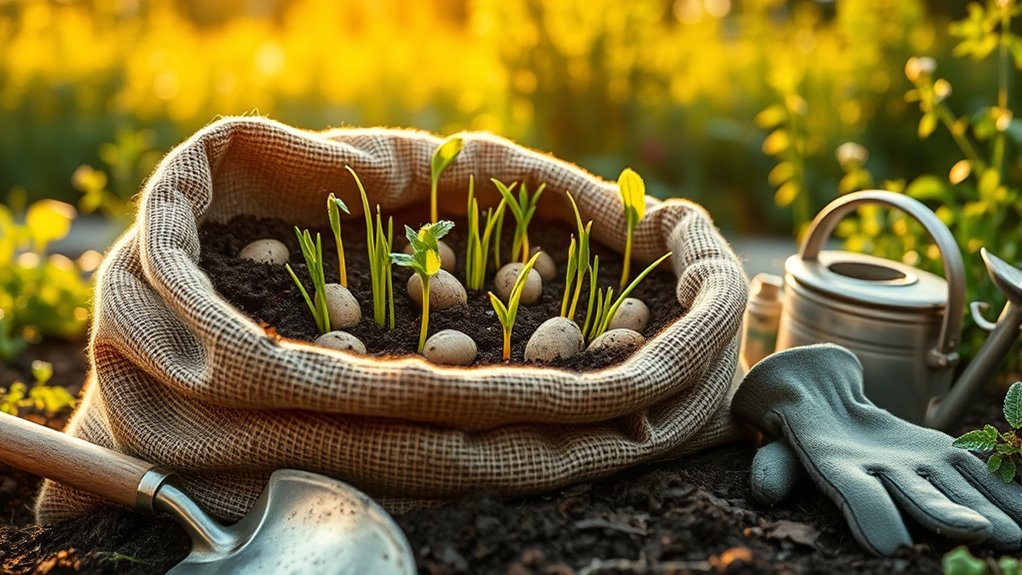
10 Steps to Grow Potatoes in a Bag
If you’ve ever wanted to grow your own potatoes but felt limited by space or worried about complicated gardening, you’re not alone. Many people struggle to find easy, efficient ways to cultivate fresh potatoes at home without needing a large garden.
Luckily, growing potatoes in a bag is a simple solution that fits even the smallest spaces.
Growing potatoes in a bag is a simple and efficient way to maximize your space. Start by choosing disease-resistant potato varieties like ‘Yukon Gold’ or ‘Red Norland’.
Use sturdy bags with drainage, filled with a rich potting mix. Plant healthy seed potatoes, and water them regularly while ensuring they get plenty of sunlight.
Keep an eye out for pests and signs of maturity like yellowing leaves. Stick around to investigate tips on harvesting and cooking your fresh potatoes!
Key Takeaways
- Choose disease-resistant potato varieties suited to your climate, such as ‘Red Norland’ or ‘Yukon Gold’, for optimal growth.
- Use sturdy, breathable bags filled with quality potting mix and compost to ensure good drainage and nutrient retention.
- Plant seed potatoes cut with healthy eyes, cover them with soil, and make sure they get 6-8 hours of sunlight every day.
- Keep an eye out for pests like aphids and potato beetles. Use organic treatments to protect your plants while keeping beneficial insects safe.
- Harvest when the flowers fade and leaves turn yellow. Make sure the potatoes are about golf ball-sized or larger for the best quality and flavor.
Introduction to Growing Potatoes in Bags
Growing potatoes in bags can be a rewarding experience, especially if you’re short on space. Bag gardening is an innovative solution that allows you to cultivate delicious potatoes without needing a large garden. You’ll find that growing in bags helps with drainage and makes it easier to control soil quality. Plus, you can move the bags around, giving your plants the best chance for sunlight.
One of the biggest potato benefits is their versatility; you can enjoy them in various dishes, from mashed to roasted. Moreover, potatoes are packed with nutrients, making them a healthy staple. When you grow them in bags, you not only save space but also get to witness the entire growth process, which is satisfying. With a little care and the right conditions, you can reap the rewards of your homegrown potatoes in a compact, efficient way.
Choosing the Right Potato Variety for Growing in Bags
When you’re picking potato varieties for growing in bags, it’s really important to choose ones that do well in small spaces. You’ll want to look for types that have good disease resistance, too, so your crop stays healthy. Knowing these things can make a big difference in how successful your potato harvest will be.
Best Varieties for Bags
Choosing the right potato variety for growing in bags can greatly impact your success and yield. For early season planting, consider red skin varieties like ‘Red Norland’ for their high yield and excellent culinary uses.
If you prefer unique shapes, fingerling varieties such as ‘French Fingerling’ are great options, offering both flavor and drought tolerance. For a late harvest, heirloom types like ‘Yukon Gold’ can provide a rich taste and good storage capabilities.
Always select varieties suited to your climate; drought-tolerant types will flourish even in challenging conditions. By choosing the right potatoes, you’ll boost your harvest and enjoy diverse flavors in your meals.
Disease Resistance Considerations
Selecting potato varieties with good disease resistance can greatly improve your success in growing them in bags. Look for types that are known to withstand common potato diseases like blight and scab. By choosing resistant varieties, you’ll not only reduce the risk of infection but also lessen the need for chemical treatments.
Employing effective disease prevention techniques, such as crop rotation and proper watering, can further boost your plants’ resilience. Moreover, consider local climate conditions and select varieties that thrive in your area. Doing so will minimize stress on the plants, making them less susceptible to diseases.
Essential Supplies for Growing Potatoes in Bags
To successfully grow potatoes in bags, you’ll need a few essential supplies that make the process easier and more productive. First, choose sturdy, breathable bags, preferably made from fabric or heavy-duty plastic. These will allow for proper drainage and aeration.
Next, consider a quality potting mix that meets your potato nutrient needs, ensuring it’s rich in organic matter. You might also want to add compost or slow-release fertilizer to boost growth.
Don’t forget garden tools like a trowel and watering can, which will help you plant and care for your potatoes efficiently. To keep things organized, a marker for labeling your bags can be handy.
Finally, remember to follow some bag gardening tips, like monitoring moisture levels and providing adequate sunlight. With these supplies in hand, you’ll set yourself up for a successful potato harvest!
Preparing Your Potato Bag: Size and Drainage
When preparing your potato bag, size and drainage are crucial for a successful harvest. Choosing the right bag material is essential; opt for sturdy options like canvas or breathable fabric. This guarantees your potatoes have enough room to grow and that excess moisture escapes.
To get started, consider these key factors:
- Size: A bag that’s at least 10 gallons can hold enough soil and potatoes for a bountiful crop.
- Drainage Holes: Make sure to punch several holes in the bottom to prevent waterlogging, which can lead to rot.
- Placement: Position your bag in a spot that receives plenty of sunlight, ideally six to eight hours a day.
Step-by-Step Guide to Planting Potatoes
Once your potato bag is set up, it’s time to plant those tubers. Start by selecting seed potatoes with healthy eyes. Cut them into pieces, ensuring each piece has at least one eye. Allow them to dry for a few hours to prevent rot.
Next, fill your bag with a few inches of soil mix, then place the potato pieces cut side down. Cover them with another layer of soil, leaving a couple of inches of space at the top. As they grow, you’ll add more soil.
Consider companion planting to boost growth and deter pests. Here’s a quick reference for beneficial companions:
| Companion Plant | Benefits | Nutrient Needs |
|---|---|---|
| Beans | Fix nitrogen | High nitrogen |
| Marigolds | Deter pests | Moderate nutrients |
| Basil | Improve flavor | Moderate nutrients |
Keep an eye on your plants, and enjoy watching them thrive!
Best Practices for Watering Your Potato Bag
When it comes to watering your potato bag, timing really is everything. You’ll want to set up a good watering schedule to keep your plants happy and healthy. At the same time, it’s important to watch out for signs that you might be overwatering.
Optimal Watering Schedule
To guarantee your potato plants thrive, establishing an ideal watering schedule is essential. Monitor the soil moisture regularly; it should be consistently damp but never soggy. Aim for a watering frequency of every 2-3 days, adjusting based on weather conditions.
Here are some tips to keep in mind:
- Check moisture: Stick your finger into the soil; if it’s dry up to your first knuckle, it’s time to water.
- Water deeply: Make sure the water reaches the roots to promote healthy growth.
- Avoid splashing: Water at the base of the plants to prevent disease.
Signs Of Overwatering
Maintaining the right balance in your watering routine is key, especially since overwatering can lead to serious issues for your potato plants. Look for signs like yellowing leaves or wilting, as these often indicate stress due to excess moisture.
You might also notice a foul odor, which suggests rotting roots. Good potato root health is essential for a successful harvest, and poor drainage in your bag can make these problems worse.
Make sure your bag has enough drainage holes to prevent water from building up. If you’re unsure, stick your finger in the soil; if it feels soggy two inches down, it’s time to cut back on watering.
Regularly check your plants to keep them thriving and healthy.
How to Manage Sunlight for Your Potato Bag
Properly managing sunlight is essential for the health of your potato plants, as they thrive on ample light for ideal growth. To guarantee your potatoes get the right sunlight exposure, consider these tips:
Proper sunlight management is crucial for healthy potato plants, ensuring they thrive with ample light for optimal growth.
- Position your bag: Place it in a spot where it receives at least 6-8 hours of direct sunlight daily.
- Rotate your bag: If possible, turn your potato bag periodically to ensure all sides get equal light, which helps promote even growth.
- Monitor shade: Keep an eye on any nearby plants or structures that might cast shadows over your bag, especially as the sun’s angle changes with the seasons.
Keeping an Eye Out for Pests and Diseases
While you’re nurturing your potato plants, keeping an eye out for pests and diseases is essential for their health. Regularly inspect your plants for signs of trouble, like yellowing leaves or unusual spots.
Familiarize yourself with pest identification; common culprits include aphids, potato beetles, and spider mites. Catching these pests early can save your crop.
If you notice any infestations, consider using organic treatment options. Neem oil or insecticidal soap can effectively manage pests without harming beneficial insects.
Furthermore, watch for diseases like blight or scab, which can affect tuber quality. Always guarantee good air circulation around your plants and avoid overcrowding to minimize disease risks.
Staying vigilant and proactive will help you maintain healthy potato plants and enjoy a bountiful harvest. By keeping pests and diseases at bay, you’re setting the stage for delicious homegrown potatoes.
Knowing When to Harvest Your Potatoes
Getting the timing just right means you’ll end up with the best quality spuds from your bag. It’s worth paying attention so you don’t miss that perfect moment!
Signs of Maturity
Determining the right moment to harvest your potatoes can make all the difference in flavor and texture. Look for these harvest indicators to confirm potato maturation:
Flowering: When your potato plants bloom, it’s a sign they’re nearing maturity.
Yellowing Leaves: As the leaves turn yellow and start to die back, it’s an indication that the tubers are ready.
Skin Hardening: Gently check the skin of the potatoes; mature ones will have firm, thick skins that resist scrapes.
Timing for Harvesting
Once you spot the signs of maturity in your potato plants, it’s time to think about the best timing for harvesting. Typically, you’ll want to wait about two to three weeks after the plants flower for ideal harvest timing.
When the foliage starts to yellow and die back, that’s a clear indicator your potatoes are ready. Gently dig around the base to check for size; mature potatoes should be around the size of a golf ball or larger.
If you’re after baby potatoes, you can harvest earlier, but be cautious not to damage the roots. Remember, timing is essential. Harvesting too late can lead to tough skins and sprouting, while harvesting too early means missing out on maximum yield.
How to Prepare and Cook Your Homegrown Potatoes
Harvesting your homegrown potatoes is just the beginning; now it’s time to prepare and cook them to savor their natural flavors. You can enjoy these versatile tubers in countless ways, so choose your favorite cooking methods. Here are some ideas to get you started:
- Roasted Potatoes: Toss chunks with olive oil, garlic, and herbs, then roast until golden brown.
- Mashed Potatoes: Boil until tender, then mash with butter and cream for a creamy side dish.
- Potato Salad: Cube and mix with mayo, mustard, and fresh veggies for a revitalizing dish.
Experiment with different potato recipes to highlight their unique taste. Remember, fresh potatoes need minimal seasoning; let their earthy flavor shine through. Whether you’re roasting, mashing, or mixing, your homegrown potatoes will make every meal special. Enjoy the bounty of your hard work!
Frequently Asked Questions
Can I Reuse Potato Bags for Multiple Growing Seasons?
Yes, you can reuse potato bags for multiple growing seasons. The benefits of using potato bags include better drainage and easier access to your plants.
Just make sure to refresh the soil types each time you plant. Remove any leftover debris from the previous crop to prevent disease.
What Pests Are Most Common When Growing Potatoes in Bags?
When growing potatoes in bags, the most common pests you’ll encounter are aphids, Colorado potato beetles, and wireworms. Pest identification is essential; check your plants regularly for signs of infestation.
If you spot any pests, consider using organic treatments like neem oil or insecticidal soap to manage the problem. Staying vigilant and addressing issues early can help guarantee a healthy crop and a bountiful harvest.
How Do I Store Harvested Potatoes Properly?
To store harvested potatoes properly, keep them in ideal conditions. You’ll want a cool, dark, and well-ventilated area, ideally around 45-50°F. Avoid sunlight, as it can cause them to sprout.
Use breathable containers like burlap sacks or cardboard boxes to prevent moisture buildup. Check regularly for any rotting or sprouting potatoes, and remove them to prevent spoilage.
Following these tips guarantees your potato storage keeps them fresh longer!
Can I Grow Other Vegetables in the Same Bag?
Yes, you can grow other vegetables in the same bag! Just make sure the bag’s depth can accommodate both potatoes and your chosen companions.
Consider companion planting; leafy greens or herbs often thrive alongside potatoes. They won’t compete for nutrients as much. However, avoid planting root vegetables that might crowd the potatoes.
What Should I Do if My Potatoes Aren’t Sprouting?
If your potatoes aren’t sprouting, check the sprouting conditions first. Make certain they’re in a warm, well-lit area, as different potato varieties may need specific temperatures to encourage growth.
Verify the soil’s moist but not soggy, and avoid overcrowding. If they still won’t sprout after a couple of weeks, consider trying a different variety known for better sprouting rates.
Sometimes, it’s just about finding the right conditions for success.
Conclusion
Growing potatoes in a bag is like nurturing a treasure chest; with a little care and attention, you’ll uncover delicious rewards. Picture the excitement of peeling back layers of soil to reveal golden nuggets, each one a symbol of your effort.
Just as a treasure hunter carefully selects their spot, you’ve chosen the perfect method for your garden. So dig in, enjoy the process, and savor the fruits of your labor. There’s nothing quite like homegrown potatoes grown in a bag!