Step-by-Step Guide to Sew a Tote Bag
If you’ve ever wanted to create your own stylish tote bag but felt overwhelmed by where to start, you’re not alone. Many people struggle with choosing the right materials and figuring out the sewing process.
The good news is, making a tote bag can be simple and fun once you know the basics.
If you want to sew a tote bag, start by choosing durable fabric like cotton or canvas and gather essential tools like scissors, pins, and a sewing machine.
Measure and create a pattern, then cut your fabric accurately. Pin the pieces together and sew the edges, reinforcing seams for strength.
Finish with hemming and topstitching to polish your work. You can investigate fun personalization options for added flair, plus tips on avoiding common mistakes along the way.
Key Takeaways
- Choose durable fabrics like cotton, canvas, or denim, and gather essential sewing tools such as a sewing machine, scissors, and pins.
- Create a tote bag pattern by measuring desired dimensions and sketching the design, making sure to add seam allowances.
- Cut fabric accurately, aligning pattern pieces with the grain. Use sharp tools to achieve clean edges.
- Sew fabric pieces together with right sides facing, reinforcing seams. Finish by turning the bag inside out and pressing flat.
- Personalize your tote with fabric paint, iron-on transfers, or unique stitching techniques for a distinctive look.
Choosing the Right Fabric for Your Tote Bag
Regarding selecting the right fabric for your tote bag, what do you need to contemplate? First, think about the fabric types. Cotton is a popular choice; it’s durable and easy to work with. If you want something sturdier, consider canvas or denim. Each fabric has its own feel and weight, so choose one that suits your style and purpose.
Next, color combinations can make a big impact. Decide if you want a bold, eye-catching design or something more subtle. Mixing patterns can add personality, but be cautious not to overdo it. Balance is key!
Finally, consider the bag’s intended use. If you’re planning to carry heavy items, choose a stronger fabric. For lighter loads, a softer option may suffice. With these factors in mind, you’ll be well on your way to creating a tote bag that’s both functional and stylish!
Essential Tools and Materials for Your Tote Bag
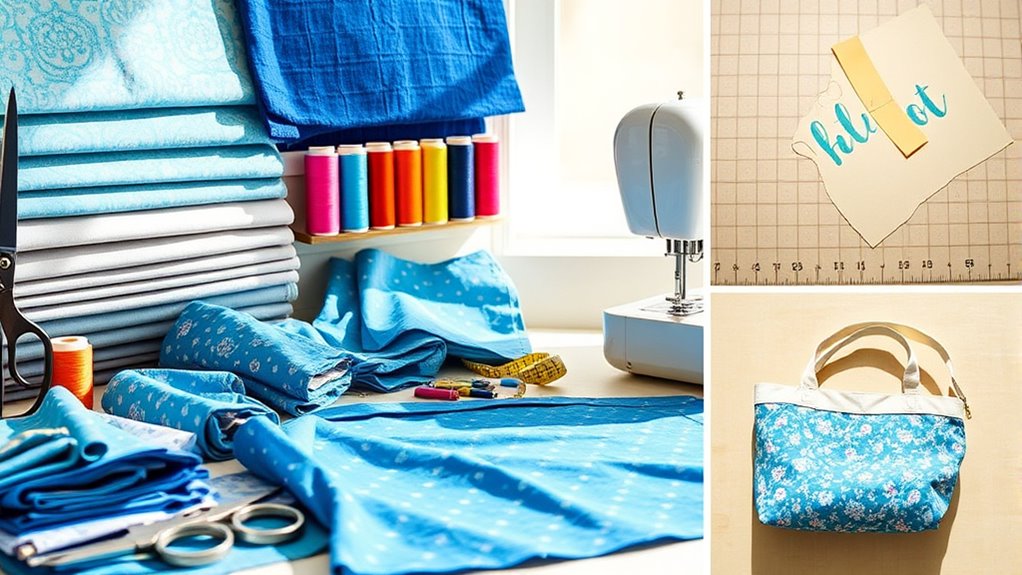
To create your tote bag, gathering the right tools and materials is essential. Start with your fabric types; cotton, canvas, or denim are popular choices for durability and style. Make sure to select a fabric that matches your intended use. Heavier fabrics work well for sturdy bags, while lighter ones are great for casual outings.
Next, you’ll need some basic sewing tools. A sewing machine is a must, but don’t forget scissors, pins, and a measuring tape. A rotary cutter and mat can make cutting fabric easier and more precise. You’ll also want thread that matches your fabric and a needle suitable for the fabric type.
Finally, consider adding a sturdy strap or handles, which you can buy or make from the same fabric. With these essentials in hand, you’re ready to plunge into the fun of creating your tote bag!
Creating Your Tote Bag Pattern: A Practical Guide
Once you’ve gathered your materials, the next step is creating a pattern for your tote bag. Start by measuring your desired bag dimensions. Consider factors like height, width, and depth.
Once you have these measurements, you’ll need to apply pattern scaling to guarantee everything fits perfectly. Use a large piece of paper or pattern material to sketch your design, including handles and any pockets.
Next, pay attention to fabric alignment. Make sure your pattern pieces align with the grain of the fabric for a professional look. This will help prevent stretching or distortion when you sew.
If you’re using multiple fabrics, lay them out together to visualize how they’ll look in your final bag. Don’t forget to add seam allowances to your pattern! This small detail can make a big difference in the final fit of your tote.
With your pattern ready, you’re one step closer to your finished tote bag!
Cutting Your Fabric: Tips for Accuracy
Cutting your fabric accurately is essential for a well-made tote bag, and following a few key tips can make all the difference. Start by guaranteeing you have measuring precision; use a clear ruler and marking tools to create accurate lines. Always measure twice before cutting to avoid mistakes.
Next, pay attention to the fabric grain. Align your pattern pieces with the grain to guarantee your tote bag has a balanced structure. Cutting against the grain can lead to distortion and uneven edges.
Paying attention to fabric grain is crucial for a balanced tote bag; misalignment can cause distortion and uneven edges.
When you’re ready to cut, use sharp scissors or a rotary cutter for clean edges. Cut slowly and steadily, maintaining your focus on the marked lines.
Lastly, consider using weights or pins to hold your fabric in place while cutting, preventing any slipping that could ruin your measurements. By following these tips, you’ll set yourself up for success in your tote bag project.
Sew Your Tote Bag: Step-by-Step Guide
Now that you’ve accurately cut your fabric, it’s time to sew your tote bag together. Start by deciding on your tote bag styles and the bag closure options you want to use. Here’s a step-by-step guide to help you through the sewing process:
Place the fabric pieces right sides together. Pin the sides and bottom, leaving the top open. Sew along the pinned edges with a straight stitch. Reinforce the seams for durability. Turn your bag inside out and press the seams flat.
Once you’ve finished sewing, add your chosen closure, like a button, snap, or zipper, to improve functionality. This will give your tote bag a polished look while ensuring your items stay secure. Enjoy the process, and take pride in your handmade creation!
How to Add Functional Pockets to Your Tote Bag
Adding pockets to your tote bag can make it way more functional and stylish. You’ll want to pick the right pocket styles, think about the best spots to place them, and make sure you take accurate measurements.
Let’s dive into some sewing techniques that will help you get those pockets just right! It’s easier than you might think, and your tote will thank you for the upgrade.
Choosing Pocket Styles
When designing your tote bag, consider incorporating at least two functional pocket styles to improve its usability. Choosing the right pocket types and sizes can help you stay organized while adding flair to your bag.
Here are some popular pocket styles to think about:
- Exterior Slip Pocket: Great for easy access to items like your phone or keys.
- Zippered Pocket: Provides security for valuables, perfect for wallets or small electronics.
- Interior Divided Pocket: Helps keep smaller items separated and organized.
- Magnetic Closure Pocket: Offers quick access while keeping contents secure.
- Drawstring Pocket: Adds a fun, casual touch, ideal for holding snacks or a water bottle.
Mix and match these styles to create a tote bag that suits your needs!
Placement and Measurements
To create a functional tote bag, precise placement and measurements for your pockets are essential. Start by determining your tote dimensions. For a standard tote, consider a size of 15”x 15”.
Measure the pocket size based on how you plan to use it.
Here’s a simple table to help you visualize:
| Pocket Type | Recommended Size | Placement Location |
|---|---|---|
| Inside Pocket | 8”x 10” | 3” from the top |
| Outside Pocket | 10”x 12” | Centered on side |
| Zipper Pocket | 8”x 8” | 2” from top edge |
Once you have your measurements, mark the fabric placement clearly before cutting. This guarantees everything aligns perfectly for a functional tote.
Sewing Techniques Explained
Incorporating functional pockets into your tote bag improves its utility and style. You can easily customize your design with some straightforward techniques. Here are key steps to contemplate:
Choose appropriate fabric types for durability and aesthetics. Utilize different stitching techniques for secure pockets. Make pattern adjustments for pocket placement and size.
Select the right needle sizes and thread choices to match your fabric. Apply proper pressing techniques to keep your seams crisp.
Using your sewing machine, start by creating pockets based on your design. Experiment with various seam finishes to guarantee a polished look. By following these steps, you’ll add both function and flair to your tote bag!
Reinforce Your Tote Bag Handles for Durability
Although tote bags are practical, their handles often bear the brunt of heavy loads, making reinforcement essential for long-lasting durability. To guarantee your tote bag stands the test of time, choose strong handle materials like canvas or nylon. Then, employ robust stitching techniques such as double stitching or bar tacking at stress points.
Here’s a quick comparison of handle reinforcement options:
| Handle Material | Stitching Technique | Durability Rating |
|---|---|---|
| Cotton Canvas | Double Stitching | High |
| Nylon | Bar Tacking | Very High |
| Leather | Reinforced Stitching | Highest |
Let’s Finish It Up: Hemming and Topstitching
Now it’s time to give your tote bag a polished finish with hemming and topstitching. These final touches make a significant difference in both durability and style. Here are some essential hemming techniques and topstitching tips to keep in mind:
Choose the right hem type (double-fold, bias, etc.) for your fabric. Use a straight stitch for a clean, professional look. Press your hem before sewing to guarantee neatness.
Select a contrasting thread color for eye-catching topstitching. And don’t forget to reinforce corners and edges with an extra row of stitching.
Embellish Your Tote Bag: Personalization Tips
Now that your tote bag is all finished, it’s time to make it truly yours. Why not play around with some fabric paint techniques? They’re super fun and let you get really creative. Or, if you’re feeling adventurous, try out some iron-on transfers—they’re an easy way to add cool designs that show off your style.
Let’s dive into these creative options and find the perfect way to add that special touch to your tote!
Fabric Paint Techniques
There’s something special about personalizing your tote bag with fabric paint techniques. You can truly make it your own using a variety of methods. Here are some ideas to get you started:
- Experiment with fabric layering techniques for depth.
- Try out different stenciling ideas for precise designs.
- Investigate fabric dyeing methods to create unique backgrounds.
- Use paint application tips for smooth, even coverage.
- Incorporate texture contrast techniques for visual interest.
Don’t forget to think about drying time considerations to avoid smudging. And always remember to seal fabric paint to keep your masterpiece intact. Finally, play with color blending strategies to achieve the perfect hues. Your tote will be a true reflection of your style!
Iron-On Transfers Ideas
Transform your tote bag with creative iron-on transfers that add a personal touch! Investigate various transfer designs to enhance your bag’s style. You can use custom graphics that reflect your personality or seasonal themes to celebrate holidays or special occasions.
Consider adding text quotes for inspiration or humor. These can be great conversation starters. If you love nature, floral motifs can bring a vibrant touch, while animal prints add a fun, wild flair.
For a sleek look, minimalist designs work perfectly, simplifying your tote with elegance. Geometric patterns also offer a modern vibe, making your bag unique. Whichever option you choose, these transfers make your tote truly yours!
Common Mistakes to Avoid When Sewing Your Tote Bag?
When you plunge into sewing your tote bag, it’s easy to overlook some common pitfalls that can derail your project. To help you avoid frustration, keep these mistakes in mind:
Ignoring fabric care: Pre-wash and iron your fabric to prevent shrinkage later.
Skipping the right sewing techniques: Use the appropriate stitch for your fabric type to guarantee durability.
Neglecting seam allowances: Always check your pattern’s seam allowance to avoid size issues.
Failing to measure twice: Double-check your dimensions before cutting to prevent wasted materials.
Overlooking finishing touches: Don’t forget to reinforce handles and seams for added strength.
Frequently Asked Questions
How Long Does It Typically Take to Sew a Tote Bag?
It typically takes you about 2 to 4 hours to sew a tote bag, depending on your skill level and the complexity of your design. If you choose simple fabric choices and a basic tote style, you might finish faster.
However, if you’re experimenting with intricate patterns or additional features, like pockets, it may take longer. Enjoy the process, and don’t rush. Each tote reflects your creativity!
Can I Use Recycled Fabric for My Tote Bag?
Absolutely, you can use recycled fabric for your tote bag! It’s a great choice that promotes sustainable materials and reduces waste. Look for fabric sources like old clothing, bed linens, or curtains.
Just make sure to clean and prepare the fabric properly before sewing. Not only will you create a unique piece, but you’ll also contribute to a more eco-friendly lifestyle.
What Sewing Machine Settings Should I Use for Tote Bag Fabric?
When you’re sewing a tote bag, think of your machine as a dance partner. Use a universal needle for lighter fabrics and a heavier needle for thicker ones. Set your stitch length to about 2.5 for a balanced look.
If you’re working with medium-weight fabric, a straight stitch will do wonders. Adjust the tension according to the fabric weight, ensuring smooth movement.
With these settings, your tote bag will come together beautifully!
How Do I Clean and Maintain My Tote Bag?
To clean and maintain your tote bag, check the fabric care label first. Most bags can handle a gentle wash in cold water; avoid harsh detergents. Air dry it flat to prevent shape distortion.
For storage, keep it in a cool, dry place away from direct sunlight to prevent fading. Regularly spot clean any stains to keep it looking fresh. Taking these steps will help your tote bag last longer.
Can I Sew a Tote Bag by Hand Instead of Using a Machine?
Absolutely, you can sew a tote bag by hand! Imagine sitting on your couch, needle in hand, crafting something unique. Hand sewing allows you to take your time and add personal touches.
You’ll just need some sturdy fabric, thread, and a few basic stitches. While it might take longer than using a machine, the satisfaction of creating a beautiful tote bag by hand makes it all worth it. Enjoy the process!
Conclusion
Now that you know how to sew your own tote bag, you can create a personalized accessory that reflects your style!
Did you know the reusable tote bag market is projected to reach $4 billion by 2027? By making your own, you’re not just saving money; you’re also contributing to a more sustainable future.
So grab your fabric and tools, and let your creativity shine as you craft a tote bag that’s distinctly yours! Sewing your own tote bag is a fun way to express yourself and support eco-friendly choices.