10 Steps to Cook a Turkey in a Turkey Bag
Cooking a turkey can be a daunting task, especially when you want it to turn out juicy and flavorful without spending hours in the kitchen. You’re not alone—many people struggle with getting the timing and seasoning just right.
If you’re looking for a simpler way to achieve a perfectly cooked bird, using a turkey bag might be exactly what you need.
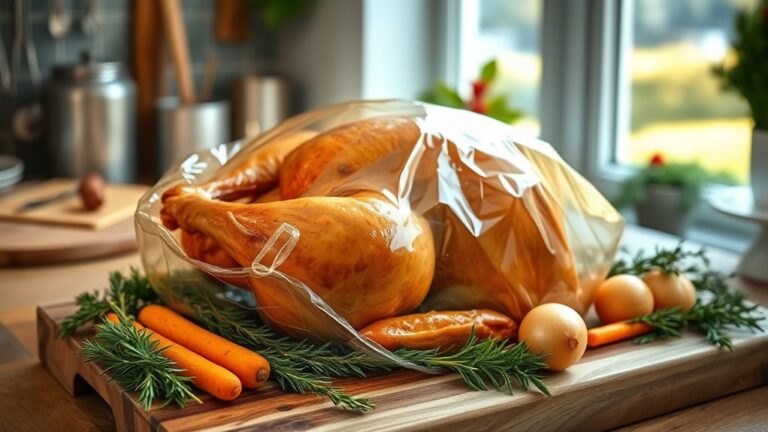
To cook a turkey in a bag, start by choosing the right turkey size for your bag. Gather your ingredients and supplies, then properly prepare and season your turkey.
Place it in the bag, sealing it securely. Set your oven temperature between 325°F and 350°F, and calculate the cooking time based on the turkey’s weight.
Once it’s done, let it rest before carving. There’s plenty more to master in this simple yet delicious method!
Key Takeaways
- Select the right size turkey and ensure it matches the bag’s capacity for optimal cooking results.
- Prepare the turkey by thawing, cleaning, and seasoning it thoroughly before placing it in the cooking bag.
- Seal the bag securely using a twist tie or clip, and cut slits for steam release.
- Preheat the oven to 325°F to 350°F and cook according to the turkey’s weight for even cooking.
- Allow the turkey to rest for 20 to 30 minutes after cooking so the juices can redistribute before carving.
Choose the Right Turkey for Your Bag
In relation to choosing the right turkey for your bag, size matters. You’ll want to match the turkey size with the capacity of your cooking bag. A standard turkey bag can typically hold a bird weighing between 12 to 24 pounds. If your turkey’s too large, it won’t fit, and if it’s too small, you may not get the juicy results you crave.
Consider your cooking method, too. If you’re roasting, a larger turkey can take longer to cook, which might not align with your time frame. Remember, a smaller turkey might cook more evenly in a bag, allowing those flavors to meld beautifully.
Always check the bag’s instructions for any specific recommendations regarding turkey size. By selecting the right turkey, you’ll guarantee a successful cooking experience that results in a perfectly tender and flavorful meal.
Gather Your Turkey Bag Ingredients and Supplies
Before you start cooking, you’ll want to gather all your turkey bag ingredients and supplies. Make sure you have everything you need, from the seasonings to the turkey bag itself, ready to go.
Having everything prepared ahead of time really helps make the cooking process smoother and more enjoyable. It’s much easier when you’re not scrambling to find things last minute!
Essential Ingredients For Turkey
Gathering essential ingredients for cooking your turkey in a turkey bag can make all the difference in achieving a flavorful result. Start with a high-quality turkey, ideally 12 to 14 pounds, for ideal cooking.
Choose a turkey marinade that suits your taste, whether it’s herb-infused, citrus-based, or a savory garlic blend. The right marinade adds depth.
Don’t forget about stuffing options. Traditional bread stuffing, cornbread, or even wild rice can enhance your dish.
Season your turkey generously with salt, pepper, and additional herbs to ensure every bite is packed with flavor.
Finally, gather some broth or wine to pour into the bag. This will keep the turkey moist during cooking.
With these ingredients, you’re well on your way to a delicious turkey feast!
Necessary Cooking Supplies
Having the right cooking supplies is essential for successfully preparing your turkey in a turkey bag. Start by choosing the appropriate turkey bag types; they usually come in oven-safe plastic or specially designed silicone options. Each type has its own benefits, like moisture retention and even cooking, ensuring your turkey stays juicy and flavorful.
You’ll also need a roasting pan to catch the drippings and a thermometer to check the turkey’s internal temperature. Don’t forget seasonings and any vegetables you want to add for flavor. Finally, grab some kitchen twine to secure the bag if needed.
With these supplies on hand, you’re well on your way to a perfectly cooked turkey in a turkey bag!
Preparing The Turkey Bag
Now that you’ve assembled your cooking supplies, it’s time to prepare your turkey bag. Start by selecting the right turkey bag type, whether it’s a disposable or reusable option. Both have their cooking bag benefits, like retaining moisture and enhancing flavor.
Next, gather these essential items:
- Seasoning mix (your favorite herbs and spices)
- Cooking twine (for securing the bag)
- A roasting pan (to catch any drippings)
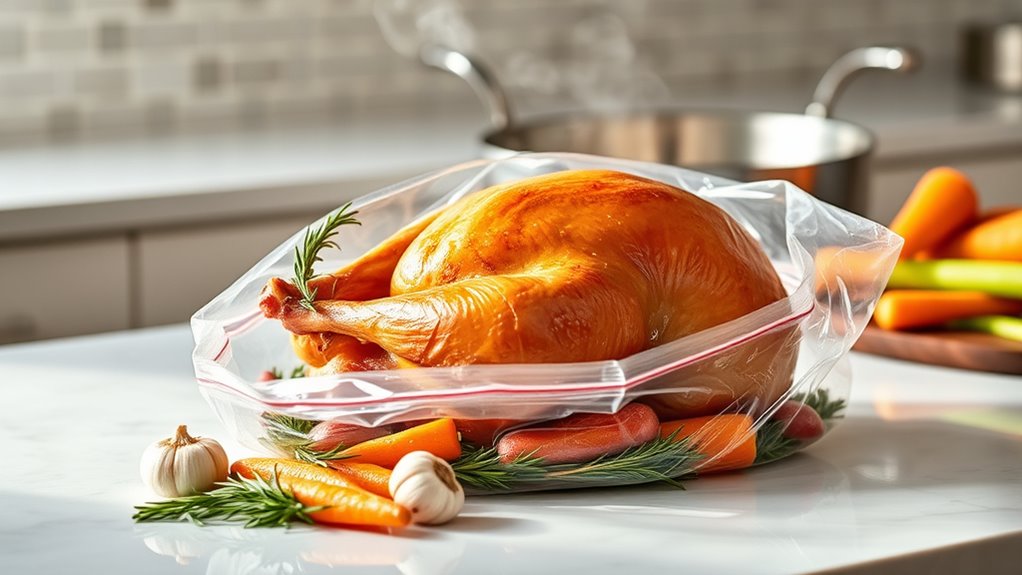
Once you’ve got everything, place the turkey inside the bag and add your seasoning. Seal it tightly, making sure no air escapes. This way, your turkey will cook evenly and stay juicy, making your meal a hit.
Enjoy the process and look forward to a delicious feast!
Prepare Your Turkey for Cooking
Before you cook your turkey, make sure it’s properly thawed. This helps it cook evenly, which is really important. Once it’s thawed, give it a good clean and pat it dry. This step is key because it helps the seasoning stick better.
And speaking of seasoning, don’t rush it—take your time to season the turkey well. This will really boost the flavor and make your turkey taste amazing.
Thawing the Turkey Properly
Thawing your turkey properly is essential for ensuring a delicious and safe meal. Using the right thawing techniques can make all the difference. The best methods include:
Refrigerator Thawing: Place your turkey in the fridge for 24 hours for every 4-5 pounds.
Cold Water Thawing: Submerge the turkey in cold water, changing the water every 30 minutes. This takes about 30 minutes per pound.
Microwave Thawing: If your turkey fits, use the microwave, but cook it immediately after thawing.
Always keep your turkey at safe temperatures throughout the thawing process to prevent harmful bacteria growth. After thawing, you’re ready to move on to cleaning and preparing your turkey for cooking!
Cleaning and Patting Dry
Cleaning your turkey is an essential step in preparing it for cooking, ensuring both safety and flavor. Start by rinsing the turkey under cold water to remove any residual blood or fluids.
Pay attention to the cavity and inner parts, as these areas can harbor bacteria. Practicing good turkey hygiene is vital, so thoroughly wash your hands and any surfaces that come into contact with the raw poultry.
After rinsing, use drying techniques to pat the turkey dry with paper towels. This helps achieve a crispy skin during cooking. Make sure to get into those crevices, ensuring it’s as dry as possible before seasoning.
Now your turkey is ready for the next steps in the cooking process!
Seasoning for Flavor Enhancement
Once you’ve cleaned and dried your turkey, it’s time to improve its flavor through seasoning. You can choose from various options to make your turkey truly delicious.
Herb blends: Mix dried herbs like thyme, rosemary, and sage for a classic touch.
Flavor injections: Use a syringe to infuse your turkey with a mixture of broth and garlic infusion.
Marinade options: Create a marinade with citrus zest and your favorite spices for a zesty kick.
Don’t forget to apply seasoning rubs and butter baste under the skin for maximum flavor. Spice combinations can raise your dish, so get creative! A well-seasoned turkey will be the star of your meal. Enjoy the process and savor the results!
Season Your Turkey for Maximum Flavor
To achieve maximum flavor, seasoning your turkey is essential. Start by choosing your desired flavor profiles, like savory herbs, citrus, or even a touch of sweetness. Popular seasoning techniques include dry brining or using a flavorful rub.
Seasoning your turkey is key to achieving maximum flavor—explore savory herbs, citrus, or sweetness for the perfect profile.
For a classic approach, mix salt, pepper, garlic powder, and thyme. Then rub it generously under the skin and all over the turkey.
If you prefer something zestier, consider a marinade with olive oil, lemon juice, and your favorite spices. Let it soak in for a few hours so those flavors can penetrate deeply.
Don’t forget to season the cavity too. Adding aromatics like onion, garlic, and fresh herbs will improve the overall taste.
Finally, keep in mind that seasoning isn’t just about the turkey itself. Think about the side dishes and sauces you’ll serve because harmonizing all the flavors will raise your meal to the next level.
How to Properly Place the Turkey in the Bag
Before you place the turkey in the bag, make certain it’s properly prepped and seasoned. Proper turkey bag placement is vital for even cooking and moisture retention.
First, consider the size of your turkey. A larger turkey may need a bigger bag, while a smaller one can fit snugly in a standard size.
Here’s how to guarantee a smooth placement:
Check the bag’s integrity: Make certain there are no tears or holes.
Position the turkey breast-side up: This helps with even cooking and allows the juices to flow correctly.
Avoid overstuffing: Ensure there’s enough room for air circulation.
How to Properly Seal and Vent Your Turkey Bag
When you’re cooking your turkey in a bag, picking the right bag is super important for a great outcome. You want something sturdy that can handle the heat without breaking or leaking.
Once you’ve got the right bag, the next step is learning how to seal it properly. Sealing it tight locks in all those delicious flavors and keeps the moisture inside, so your turkey turns out juicy and tender.
Choosing The Right Bag
- Material: Look for heat-resistant, FDA-approved nylon bags that can withstand high temperatures without melting.
- Size: Choose a bag that comfortably fits your turkey, allowing for proper heat circulation. Typically, a 16- to 24-pound turkey requires a 2- or 3-gallon bag.
- Ventilation: Confirm the bag has ventilation options like slits or holes to prevent steam buildup while keeping moisture in.
Getting these details right will help you achieve a juicy, perfectly cooked turkey.
Sealing Techniques Explained
Sealing your turkey bag correctly is essential for achieving a moist, flavorful bird. Start by choosing the right bag materials; heat-resistant bags work best. Use proper sealing methods to guarantee the bag stays closed during cooking.
Here are some effective techniques:
| Sealing Method | Description |
|---|---|
| Twist Tie | Twist the top of the bag and secure it with a tie. |
| Clip | Use a metal or plastic clip to hold the bag shut. |
| Fold and Tuck | Fold the top of the bag down and tuck it securely. |
| Heat Seal | Use a heat sealer for a permanent closure. |
Don’t forget to vent the bag by cutting a few small slits at the top. This allows steam to escape, preventing the bag from bursting. Happy cooking!
Set Your Oven Temperature for the Best Results
To achieve the best results when cooking a turkey in a turkey bag, you’ll want to set your oven temperature carefully. A precise oven temperature not only improves cooking efficiency but also guarantees that your turkey is cooked evenly and remains juicy. The ideal temperature for cooking turkey in a bag is typically between 325°F and 350°F.
Here are a few tips to keep in mind:
Preheat your oven: Make sure it reaches the desired temperature before placing the turkey inside.
Avoid opening the door: Each time you do, heat escapes and affects cooking efficiency.
Use a meat thermometer: This helps confirm that your turkey has reached the safe internal temperature.
Calculate Your Cooking Time
Calculating your cooking time is essential for guaranteeing your turkey turns out perfectly. The cooking time varies based on your turkey size, so it’s vital to plan accordingly.
Generally, you can expect around 2 to 2.5 hours for a 12- to 14-pound turkey. Here’s a quick reference to help you figure out your cooking time:
| Turkey Size (lbs) | Cooking Time (hours) |
|---|---|
| 8 – 12 | 2.5 – 3 |
| 12 – 14 | 3 – 3.75 |
| 14 – 18 | 3.75 – 4.25 |
| 18 – 20 | 4.25 – 4.75 |
Make sure to adjust your time if your turkey is stuffed or if it’s on the larger side. By keeping these guidelines in mind, you’ll guarantee your turkey cooks evenly and stays juicy.
How to Check if Your Turkey Is Done?
Once you’ve calculated your cooking time, it’s important to know how to check if your turkey is done. You want to confirm it’s safe to eat and perfectly cooked. Here are some key doneness indicators to keep in mind:
It’s essential to check your turkey for doneness to ensure it’s safe and perfectly cooked.
Internal Temperature: Use a meat thermometer to check the thickest part of the turkey, ideally the breast and thigh. Aim for at least 165°F (75°C).
Juices: When you pierce the turkey, the juices should run clear, not pink. This is a good visual safety tip.
Leg Movement: If the leg moves freely at the joint, it’s usually a sign that your turkey is cooked through.
What to Do After Cooking Your Turkey
After cooking your turkey, let it rest for at least 20 to 30 minutes before carving. This resting period allows the juices to redistribute, ensuring your turkey stays moist and flavorful.
Once it’s rested, use proper carving techniques to serve it beautifully.
Here’s a handy guide to help you:
| Step | Description |
|---|---|
| 1. Remove the turkey | Take it out of the bag carefully. |
| 2. Tent with foil | Cover loosely with aluminum foil to keep warm. |
| 3. Identify joints | Locate the joints for easier carving. |
| 4. Carve with precision | Use a sharp knife for clean slices. |
Following these steps will make your turkey presentation impressive and your meal delightful. Enjoy the fruits of your labor and gather everyone for a delicious feast!
Frequently Asked Questions
Can I Reuse a Turkey Bag for Cooking Again?
You shouldn’t reuse a turkey bag for cooking. While turkey bags offer great benefits like keeping the meat moist and reducing cooking time, they’re designed for single use.
After cooking, the bag can become weakened or contaminated, which isn’t safe. If you’re looking for alternatives, consider using a roasting pan with a lid or foil.
These can also help retain moisture and flavor while being more durable for multiple uses.
What if My Turkey Bag Leaks During Cooking?
If your turkey bag leaks during cooking, don’t panic! You can still salvage your meal. Just carefully handle the turkey, transferring it to a roasting pan to catch any drippings.
This coincidence of a leak might even improve the flavors as the juices mingle. Make sure to check the bag for any damage, and if it’s too torn, it’s best to discard it and use a new one next time.
How Can I Prevent the Bag From Sticking to the Turkey?
To prevent the bag from sticking to your turkey, use these turkey preparation tips: First, make sure your turkey is well-dried and coated lightly with oil or butter. This creates a barrier between the meat and the bag.
When handling the bag, avoid overstuffing it, as this can cause it to cling. Finally, gently massage the bag before sealing to allow some air to circulate, helping to reduce sticking during cooking.
Is It Safe to Cook a Stuffed Turkey in a Bag?
Yes, it’s safe to cook a stuffed turkey in a bag, but you need to be cautious. Did you know that about 70% of foodborne illnesses come from improperly cooked meats? To guarantee stuffing safety, make sure the stuffing reaches at least 165°F.
Using a turkey bag can help maintain moisture and promote even cooking, but always check the turkey’s temperature and verify the stuffing is cooked through for the best results.
How Do I Clean up After Using a Turkey Bag?
After using a turkey bag, you should first let it cool down before disposal. Carefully remove the turkey and any juices, then check for any leaks.
For turkey bag disposal, seal it in a plastic bag to prevent spills. Wipe down your countertop and any surfaces with warm, soapy water to eliminate grease. Use cleaning tips like vinegar or baking soda for stubborn spots.
Finally, wash your utensils and cutting board thoroughly.
Conclusion
As you carve your beautifully cooked turkey, think of it as unwrapping a gift. Each slice reveals the hard work and care you poured into it, much like a gardener nurturing a seed into a bountiful harvest.
Your turkey bag journey has transformed a simple bird into a feast of flavors. So, gather your loved ones around the table, share stories, and savor the fruits of your labor because every meal shared is a celebration of togetherness when you cook a turkey in a turkey bag.