10 Simple Steps to Make Tea With Tea Bags
If you’ve ever struggled to brew the perfect cup of tea with tea bags, you’re not alone. Many people find it tricky to get the timing, temperature, and flavor just right.
Whether you’re new to tea or just looking to improve your routine, understanding the basics can make a big difference.
To make tea with tea bags, start by choosing a tea that suits your taste, like black or herbal. Use fresh, filtered water and heat it to the right temperature for your tea type.
Measure one bag per cup, steep for the recommended time, then strain and serve. Avoid common mistakes, like using stale tea or oversteeping.
Experiment with different brewing methods to find your perfect cup. There’s more to discover about enhancing your tea experience.
Key Takeaways
- Select the right tea bag based on flavor preference, caffeine levels, and quality from local suppliers for the best experience.
- Use fresh, filtered water to enhance flavor. Avoid reboiled water as it lacks oxygen.
- Steep tea at the appropriate temperature: black (200°F), green (175°F), herbal (212°F) for optimal flavor extraction.
- Measure tea bags correctly; one bag per eight-ounce cup. Adjust for larger servings to avoid bitterness.
- Avoid common mistakes by ensuring tea freshness, using proper equipment, and monitoring steeping times for best results.
Choose the Right Tea Bag for Your Taste
How do you choose the perfect tea bag for your taste? Start by exploring different tea origins. If you love robust flavors, black selections might be your go-to. For a lighter option, consider green options that offer a revitalizing sip. Don’t overlook herbal varieties, which can provide unique tastes without caffeine.
Next, think about flavored blends. These can add a delightful twist to your cup, combining fruits, spices, or flowers with your base tea. Pay attention to caffeine levels as well. If you’re sensitive to caffeine, herbal or some green options are ideal.
Once you’ve narrowed down your preferences, check out local suppliers for fresh selections. They often stock unique offerings that you won’t find in larger stores. Finally, verify your brewing equipment is ready to bring out the best in your chosen tea bag, setting you up for a perfect brew every time.
Use Fresh, Quality Water for Brewing
Choosing the right tea bag is only the beginning of a great brewing experience; the water you use plays an essential role, too. Fresh, quality water can make or break your tea. Tap water might seem convenient, but its mineral content and potential impurities can affect the flavor. If your tap water tastes off, it’ll carry those flavors into your brew.
Opt for filtered or bottled water to guarantee a clean taste. Look for water with balanced mineral content; too many minerals can overpower your tea, while too few can leave it flat.
Always use cold, fresh water, as reboiled water can lose oxygen, which is vital for flavor extraction. By prioritizing water quality, you’ll enhance your tea-drinking experience, bringing out the rich notes and aromas that your chosen tea bag has to offer. So, invest in the right water for the best cup of tea!
What’s the Best Water Temperature for Tea?
While the type of tea you’re brewing is important, the water temperature can greatly influence the final flavor. Different water types and brewing methods require specific temperatures for ideal results. Here’s a quick guide to help you:
| Tea Type | Ideal Temperature | Brewing Method |
|---|---|---|
| Green Tea | 175°F (80°C) | Steep for 2-3 minutes |
| Black Tea | 200°F (93°C) | Steep for 3-5 minutes |
| Herbal Tea | 212°F (100°C) | Steep for 5-7 minutes |
Using the right temperature not only improves the flavor but also prevents bitterness. For example, if you brew green tea with boiling water, it can taste harsh. So, pay attention to these details, and you’ll enjoy a perfectly brewed cup every time!
Measure the Right Amount of Tea Bags
Getting the right amount of tea bags is essential for a flavorful brew. Start by considering the tea bag types you’re using, as they can vary in strength and flavor. Generally, one tea bag is enough for an eight-ounce cup, but if you’re brewing a larger pot, you’ll need to adjust accordingly.
Getting the right tea bag quantity is key to a delicious brew; one bag typically suffices for an eight-ounce cup.
For a standard 32-ounce teapot, four bags should do the trick.
To guarantee precision, use measuring spoons if you’re working with loose leaf tea or if you want to gauge the strength of your brew better. If you prefer a robust flavor, feel free to experiment by adding an extra bag or two.
Just remember, too much tea can lead to bitterness, so find that sweet spot that suits your taste. By measuring right, you’re on your way to a delicious cup of tea!
Steep Your Tea for the Perfect Duration
After measuring the right amount of tea bags, the next step is to focus on steeping your tea for the perfect duration. Different types of tea require specific ideal infusion times to bring out their best flavors. For example, black tea usually needs about 3 to 5 minutes, while green tea benefits from a shorter steep of 2 to 3 minutes.
Using proper tea steeping techniques is essential to avoid bitterness or blandness. Keep an eye on the clock because oversteeping can lead to a harsh taste. If you’re brewing herbal tea, aim for 5 to 7 minutes for a robust flavor.
Experiment with different steeping times to find what suits your palate. Remember, every cup is a chance to refine your technique, so take notes on what works best for you. Enjoy the journey of uncovering the perfect steep!
Enhance Your Tea With Flavor Additions
To improve your tea experience, consider incorporating flavor additions that complement the natural notes of your brew. Start by exploring herbal infusions, which can raise your drink with floral or fruity undertones. Sweetener options like honey, agave, or stevia can add just the right touch of sweetness.
Spice blends, such as cinnamon or cardamom, can infuse warmth and depth. For a revitalizing twist, try citrus twists from lemons or oranges to brighten your cup.
If you prefer a creamier texture, milk alternatives like almond or oat milk can provide a delightful richness. Don’t forget about cooling techniques; chilling your tea and serving it over ice can create a rejuvenating summer beverage.
Finally, consider serving suggestions like pairing your tea with light snacks or pastries that harmonize with the flavors. With these simple additions, you can transform your tea into a unique and enjoyable experience.
Strain and Serve Your Tea Properly
Now that your tea is brewed, it’s time to strain and serve it just right. Just pick the right strainer to catch any loose leaves. Then, pour carefully and slowly to avoid spills. Oh, and don’t forget to add any optional ingredients to elevate your experience!
Choose The Right Strainer
Choosing the right strainer can make all the difference in your tea experience. With various strainer types available, you’ll want to pick one that suits your needs. For instance, a fine mesh strainer works well for loose tea, capturing even the smallest particles.
On the other hand, an infuser ball or a tea sock can be convenient for quick brewing.
Consider strainer materials too; stainless steel is durable and easy to clean, while silicone offers flexibility and fun designs. If you prefer a more eco-friendly option, look for bamboo or biodegradable materials.
Ultimately, your choice of strainer affects the clarity and taste of your tea, so choose wisely to improve your brewing experience.
Pour Carefully And Slowly
Pouring your tea carefully and slowly assures you achieve the perfect cup. Mastering tea pouring techniques can really uplift your tea experience. When you pour gently, you minimize splashing and guarantee an even distribution of flavors.
Here are some tips to improve your pouring skills:
Use a teapot or kettle with a spout designed for precision. Hold the cup steady to avoid spills. Pour from a low height for better control.
Allow the tea to flow smoothly; don’t rush the process. Pause briefly to let the tea settle, if necessary.
Enjoy With Optional Additions
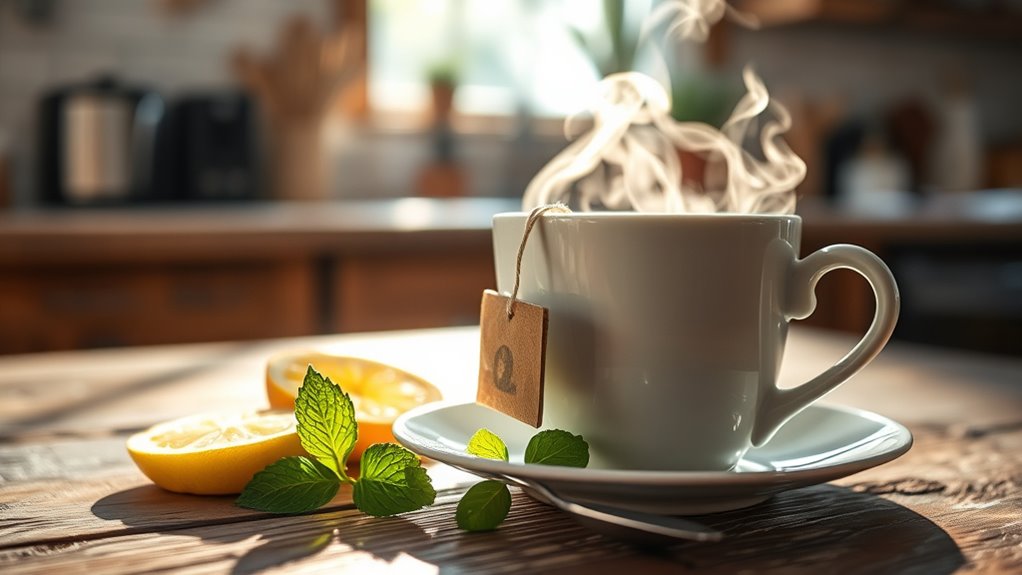
As you savor your freshly brewed tea, consider improving its flavor with optional additions that cater to your taste. A dash of honey or a splash of milk can create delightful flavor combinations, while fresh herbs like mint or basil can add a revitalizing twist.
If you enjoy fruity notes, try adding slices of lemon or a few berries for a vibrant tea pairing. For a spiced kick, a pinch of cinnamon or a few cloves can uplift your cup.
Don’t forget to strain your tea properly to avoid any stray leaves. Experimenting with these improvements not only personalizes your tea experience but also transforms it into a unique moment of enjoyment. So, go ahead and indulge!
Common Mistakes to Avoid When Brewing Tea
When brewing tea, it’s easy to overlook details that can greatly affect the flavor. To guarantee you enjoy the best cup possible, steer clear of these common mistakes:
- Using stale tea: Proper tea storage is vital. Always check the freshness of your tea bags.
- Incorrect water temperature: Different teas require specific temperatures for ideal brewing.
- Neglecting brewing time: Over-steeping can lead to bitterness, while under-steeping may result in weak flavor.
- Not using the right brewing equipment: Quality tools can improve your tea experience; don’t settle for subpar items.
- Ignoring flavor balance: Adjust your ingredients and steeping time to suit your palate, avoiding common misconceptions about tea strength.
Experiment With Different Brewing Techniques
If you want to improve your tea experience, experimenting with different brewing techniques can be a game changer. By trying various brewing methods, you’ll discover unique tea variations that can raise your enjoyment.
Here’s a quick reference guide to get you started:
| Brewing Method | Time (minutes) | Temperature (°F) |
|---|---|---|
| Steeping | 3-5 | 200-212 |
| Cold Brew | 6-12 | Room Temp |
| French Press | 4 | 200-205 |
| Infuser Bottle | 2-4 | 180-190 |
Feel free to adjust steeping times and temperatures based on your personal preference. Each method brings out different flavors and aromas, so don’t hesitate to play around until you find your perfect brew. Happy experimenting!
Tips for Enjoying Your Perfect Cup of Tea
To enjoy your perfect cup of tea, you’ll want to pay attention to a few key details. First, start with the ideal brewing temperature—it really makes a difference. Then, choose a flavor that excites your palate because, after all, tea should be something you look forward to. And finally, don’t forget to be mindful of the steeping time; that’s what really brings out the best taste. Enjoy every sip!
Ideal Brewing Temperature
The ideal brewing temperature can make or break your cup of tea, and getting it right is essential for extracting the best flavors. Different types of tea require specific temperatures to release their unique characteristics, so pay attention to your brewing techniques.
Here are some tips to help you achieve the perfect brew:
- Black tea: 200-212°F (93-100°C)
- Green tea: 160-180°F (71-82°C)
- White tea: 160-185°F (71-85°C)
- Oolong tea: 185-205°F (85-96°C)
- Herbal tea: 200-212°F (93-100°C)
Brewing at the right temperature not only improves taste but also maximizes health benefits. So, experiment a little, and soon you’ll find your perfect cup!
Choose Your Flavor
Brewing tea at the right temperature sets the stage, but choosing your flavor truly improves the experience. Investigate various options to find the perfect cup that suits your mood. Whether you prefer bold black teas, soothing herbal blends, or invigorating green teas, there’s something for everyone.
Seasonal flavors can also enhance your enjoyment, adding a touch of festivity to your tea routine.
| Tea Type | Flavor Profile | Best Time to Enjoy |
|---|---|---|
| Herbal Blends | Chamomile, Peppermint | Evening wind-down |
| Black Tea | Rich, malty | Morning energy boost |
| Green Tea | Fresh, grassy | Afternoon pick-me-up |
| Seasonal Flavors | Pumpkin Spice, Mint | Fall and Winter |
Experiment with different combinations to find your favorites!
Perfect Steeping Time
While you might have your favorite tea flavor, getting the steeping time just right is essential for that perfect cup. Mastering your tea timing will enrich the flavors, making each sip enjoyable. Here are some steeping techniques to contemplate:
Black Tea: Steep for 3-5 minutes for a robust flavor.
Green Tea: Aim for 2-3 minutes to avoid bitterness.
Herbal Tea: Steep for 5-7 minutes to fully extract flavors.
White Tea: Stick to 4-5 minutes for a delicate taste.
Oolong Tea: Steep for 4-7 minutes for a balanced profile.
Experiment with these times to find what suits your palate best. Remember, the right steeping time can boost your tea experience considerably!
Frequently Asked Questions
Can I Reuse Tea Bags for Multiple Cups?
Yes, you can reuse tea bags for multiple cups, but the flavor strength will diminish with each use. The first cup usually offers the richest taste, while subsequent brews will be lighter.
If you enjoy a milder flavor, reusing tea bags can be a great way to stretch your supply. Just remember to store the used bags in the fridge if you plan to reuse them later, keeping them fresh for your next cup.
How Long Can I Store Unused Tea Bags?
You can store unused tea bags for about 1 to 2 years, depending on their type. To maximize their tea bag lifespan, keep them in a cool, dry place away from light and moisture. Use airtight containers for better protection.
Avoid storing them near strong odors, as they can absorb those smells. Following these tea storage tips guarantees your tea bags stay fresh, flavorful, and ready for your next cup!
Are There Health Benefits to Drinking Tea?
Absolutely, sipping tea can boost your health! With its antioxidant properties, tea helps combat free radicals, promoting overall wellness.
Plus, it’s a fantastic way to stay hydrated, better than scrolling through social media on your phone! Regularly enjoying various types of tea can support your immune system, improve digestion, and even improve focus.
What Types of Tea Bags Are Biodegradable?
You’ll find that biodegradable tea bags are often made from materials like paper, hemp, or plant-based bioplastics. These options greatly reduce environmental impact compared to traditional plastic or nylon tea bags.
When you choose tea bags made from these materials, you’re not just enjoying a soothing beverage; you’re also making a positive choice for the planet. Always check the packaging to verify you’re picking the eco-friendly variety for your tea time!
Can I Make Iced Tea With Tea Bags?
Absolutely, you can make iced tea with tea bags! Don’t worry if you think it’s complicated; it’s actually quite simple. Just brew your tea as usual, then chill it in the fridge.
For tasty iced tea recipes, experiment with flavor variations by adding fruits, herbs, or sweeteners. Try lemon slices for a revitalizing twist or mint for a cooling effect.
You’ll enjoy a deliciously customized drink that’s perfect for any occasion!
Conclusion
Now that you’ve mastered the art of brewing tea, you’re one step closer to achieving tea zen, where every sip feels like a warm hug for your soul! Imagine a world where every cup transports you to a serene tea garden, leaving all your worries behind.
With these simple steps, you’ll become a tea maestro, impressing friends and family with your unparalleled skills. So, grab your favorite tea bag and enhance your tea game to legendary status by following these 10 simple steps to make tea with tea bags!